Search Results
Search
Filter results
Advanced Filters
Your search returned 379 Solutions
-
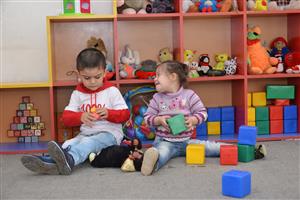
Supporting smooth and inclusive transitions from preschool to primary school
For teachers SMILE offers capacity-building training on Inclusive Education and mentoring visits to assistance. Also the parents are supported to encourage them to actively participate in their children's education. Furthermore, the programme also promotes cooperation between teachers and parents.
Bridge of Hope, SMILE for Children, Armenia -

Eight-month vocational training programme for young deaf people to become Apple software developers
iSchoolAfrica in South Africa started Deaf Developers in 2022, training youth in iOS development. By 2024, 7 of 8 graduates were employed, some teaching coding to deaf students.
iSchoolAfrica Education Trust, Deaf Developers Programme, South Africa -

Large-scale campaign to identify and enrol children with disabilities in Senegal
APPEHL follows a multilevel approach to make mainstream schools more inclusive. For children and parents, the programme includes awareness raising measures and training in dealing with impairments. For schools, learning materials are adapted and teachers are trained by teachers from the special education sector.
Humanity & Inclusion Senegal, Full Participation of Children with Disabilities in Education Programme (APPEHL), Senegal -

Increasing Access to Health and Education Services for Children
The Inclusion Club model uses existing local resources to support children with disabilities in rural villages. Inclusion Clubs bring together village officials, health and education professionals, and children with disabilities and their families to build local capacity and exchange skills, so families can support their children at home.
SEHATI Sukoharjo Community Group, Inclusion Clubs, Indonesia -
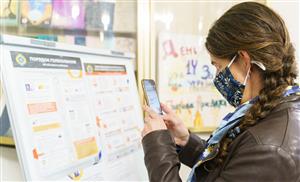
QR Codes used to inform voters who are blind or deaf about voting procedures
In the run-up to the 2020 local elections in Ukraine, the International Foundation for Electoral Systems (IFES) joined forces with the Central Election Commission of Ukraine to develop information posters with QR codes. These were linked to audio and sign language formats and were used by approximately 6,000 people.
International Foundation for Electoral Systems (IFES), Accessible Voter Education in Ukraine, Ukraine -

Vocational training for jobseekers with intellectual disabilities rolled out countrywide
Chance B’s KomKom program in Austria aids disadvantaged youth via dual apprenticeship models. Expanded nationally in 2019, it involved 270 trainees by 2024 with a strong certification system.
Chance B Holding GmbH, KomKom, Austria -
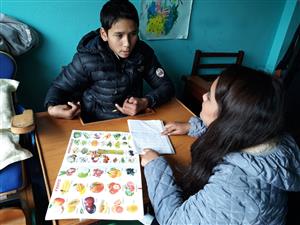
Promoting community-based Inclusive Education
Sama Nepal focuses on a "base school", which includes a care centre and/or a resource class in which children with special needs are enrolled. From there they participate in mainstream school activities according to their abilities. From 2016 to 2019, 222 children with disabilities have benefited from this support.
Sama Nepal, Including children with disabilities in mainstream schools in Nepal, Nepal -

Empowerment youth through storytelling and digital media in sub-Saharan Africa
Tai Tanzania: Offers non-formal education with digital media and storytelling. Addresses issues such as albinism and autism. Utilises YouTube, school classes, radio and TV stations and other NGOs to disseminate information.
Tai Tanzania, Pamoja (Inclusive) Project, Tanzania -
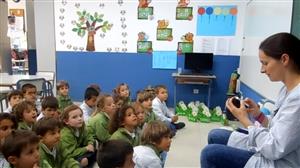
Noise-free school model inclusive of students with hearing impairments
Classrooms at Tres Olivos School are built with sound-absorbing materials and equipped with sound-level meters. The school has 98 teachers (including seven speech therapists and two deaf teachers) and 1,100 students who are educated from early childhood to high school and also in two vocational trainings.
Dales la Palabra Foundation, Tres Olivos School, Spain -
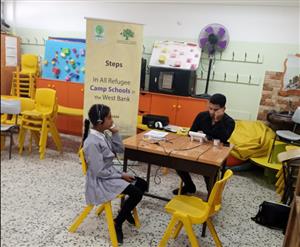
Providing hearing and seeing aids paired with inclusive education in refugee camps
PCCDS, Hebron: Improves educational outcomes for students with hearing and visual disabilities. Provided hearing aids and glasses, increasing completion rates from 27% to 59%.
Support programme for young people with visual or hearing disabilities, Palestine