Search Results
Search
Filter results
Advanced Filters
Your search returned 379 Solutions
-
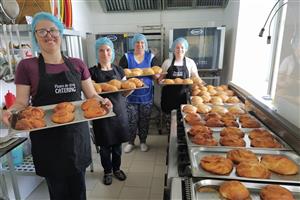
A catering service training and vocation programme
Floare de Cireş is a catering service in the town of Razeni in Modava founded in 2012 to give disadvantaged young people a chance to get their first job. In 2015 the project was extended to include a workplace training programme, which more than 100 people with disabilities had completed by 2020.
Eco-Razeni Association, Floare de Cireş, Moldova -
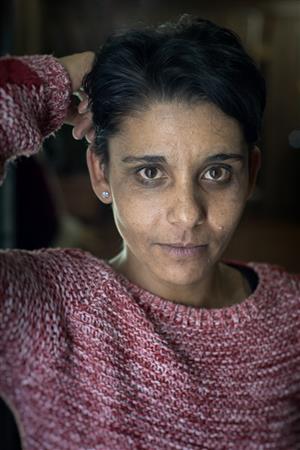
A Biographical Graphic Novel Promoting Deinstitutionalization
The story of Eli is inspiring greater independence for people with intellectual disabilities
Published in 2017, Becoming Eli is the work of Dan Ungureanu and the first graphic novel to address institutional abuse suffered by children and adults, the majority with disabilities. Based on a true story of a young girl left in state care the book wants to show that with the right support deinstitutionalization is possible.
Ceva de Spus Association, Gravis Novel Becoming Eli, Romania -
At-home support for parents with intellectual disabilities
Begleitete Elternschaft’ (Accompanied Parenthood ) is a project of MOBILE – Selbstbestimmtes Leben Behinderter e.V. from Germany. Since 2006 eight to twelve parents with intellectual disabilities per year are supported in raising their children at home, assisted by educators in the areas of life skills, teaching, and childcare.
Mobile - Independent Living of Disabled People e.V., Accompanied Parenthood (Begleitete Elternschaft, BE), Germany -

Cross-sectoral effort to build accessible homes for people with disabilities in poverty
Puspadi Bali operates a housing project in Bali for people with physical disabilities living in poverty. The houses are built after an individual evaluation and in collaboration with Warmadewa University and Journeyman International, an NGO focusing on architectural services in a humanitarian context.
PUSPADI Bali, Accessible Housing, Indonesia -

Providing assistive technology for children in rural Asia
In 2020, Amar Seva Sangam of India launched the ‘Paediatric Assistive Technology Provision’ programme with a focus on children in rural areas, including a training programme for rehabilitators and financial support. It is expected that by the end of 2022 close to 1,000 assistive devices will be provided to users.
Amar Seva Sangam, Paediatric Assistive Technology Provision Programme, India -

Free online platform supporting families of children with intellectual disabilities
The Nayi Disha Resource Centre offers a free online platform for families with children with developmental disabilities. Building on this, the NGO has developed a program to support caregivers with limited digital literacy by using resources such as WhatsApp as well as workshops, support groups or family events.
Online platform for empowering parents of children with intellectual disabilities, India -
Sign language relay service with a successful scaling strategy
DeafTawk is a technology start-up that has developed a mobile application that connects deaf users with certified sign language interpreters in real time and around the clock via video calls. DeafTawk is available on both IOS and Android, and in 2020 has 14,600 users in Pakistan as well as in Singapore.
DeafTawk, DeafTawk, Pakistan -
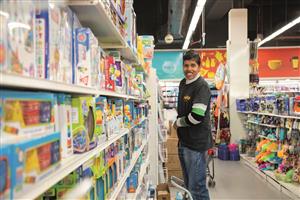
Transfering persons with intellectual disabilities out of sheltered workshops
Israel Elwyn has launched two programmes in 2015 to move people with intellectual disabilities into the mainstream labour market. ‘Future Direction’ is aimed at individuals who have been working in sheltered workshops for many years, while ‘Creating a Future’ is aimed at high school students.
Israel Elwyn, Israel Elwyn – Transitional Programmes, Israel -
Disability-led centres providing a range of services for independent living
FOH centres are run entirely by people with disabilities and aims to offer comprehensive services for such people in their home and throughout their daily lives. In 2017, 47 homes were adapted, 223 people were provided with transport, 120 people took part in sport or the arts, and 2,435 assistive devices were provided.
Forum of the Handicapped, Lebanon -

Promoting the use of the Scripor alphabet, tactile representations of colour
The Scripor alphabet, invented in 2018 by the Asociatia Alfabetul Scripor from Romania, is the first universal colour standardization in Braille. Ten colours can be distinguished in light and dark with only two combinations of dots. International promotion of the alphabet is done through manuals and workshops.
Scripor Alphabet Association, Scripor Alphabet, Romania