Search Results
Search
Filter results
Advanced Filters
Your search returned 562 Solutions
-
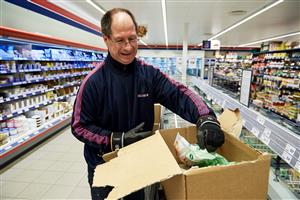
Employer-driven job creation for people with intellectual disabilities
The KLAPjob project forms partnerships with various companies to identify and advertise jobs in the open labour market. People with intellectual disabilities are then helped to choose and apply for the most suitable job for them. Between 2014 and 2019, KLAPjob has successfully supported people into 3,684 jobs.
Lev - Inclusion Denmark, KLAPjob, Denmark -
The professionalisation of empowerment
Peer counsellors have their own experience of disability and advise similarly affected people to enable them to take control of their own lives at home, in the community and at work. For the first time in the world, the province of Upper Austria has established peer counselling as a social profession.
Office of the Upper Austrian Provincial Government, Department of Social Affairs, The professionalisation of empowerment, Austria -
AMAC provides a cost-effective, replicable, scalable, holistic business model which provides accessible solutions and research for corporate, governmental and non-profit entities supporting post-secondary individuals with disabilities
AMAC offers a one-stop shop for digital and alternative media textbooks, cost-effective reuse of digital libraries, remote captioning and downloadable assistive technology software to quickly access materials at universities, colleges, government agencies, non-profits, and corporations. Over 300,000 textbook title records are updated weekly.
AMAC - Accessibility Solutions & Research Center, Digital Library with more than 300,000 textbooks, United States of America -
Sign language relay service with a successful scaling strategy
DeafTawk is a technology start-up that has developed a mobile application that connects deaf users with certified sign language interpreters in real time and around the clock via video calls. DeafTawk is available on both IOS and Android, and in 2020 has 14,600 users in Pakistan as well as in Singapore.
DeafTawk, DeafTawk, Pakistan -

Transfering persons with intellectual disabilities out of sheltered workshops
Israel Elwyn has launched two programmes in 2015 to move people with intellectual disabilities into the mainstream labour market. ‘Future Direction’ is aimed at individuals who have been working in sheltered workshops for many years, while ‘Creating a Future’ is aimed at high school students.
Israel Elwyn, Israel Elwyn – Transitional Programmes, Israel -
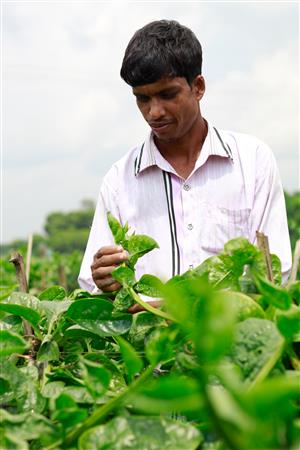
Promoting self-employment in agriculture and aquaculture by training and microfinance
DRRA’s ‘Jibika’ project supports people with disabilities in the rural districts of Sathkhira and Jhenaidah to run their own vegetable or crab farming businesses by providing training and microfinance. Between 2017 and mid-2020, 514 people with disabilities were involved in running their own businesses.
DRRA - Disabled Rehabilitation and Research Association, JIBIKA, Bangladesh -
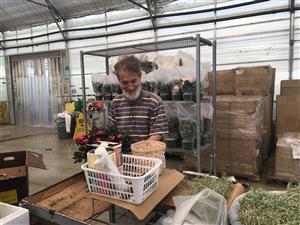
Individualized supports help adults with autism find jobs
ACAP is a government-funded project offering a range of individualized services to support adults with autism to achieve their goals. Employment is an integral part of each plan. Starting in 2010 with just 37 participants, the programme has since grown to 180 by 2019, with 99 adults in employment.
Keystone Human Services, KAS - Keystone Autism Services, KAS Adult Community Autism Project, United States of America -
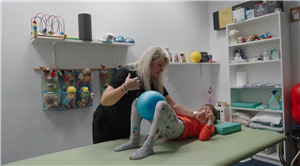
Emergency early childhood intervention supporting over 12,000 Ukrainian refugees
EASPD's Emergency Support for Ukrainian Refugees: Develops new models for transnational cooperation and resources for children affected by war. Created a large database of tools and materials adaptable to other regions.
Joint Emergency Early Childhood Development Support for Ukrainian Refugees, Bulgaria -
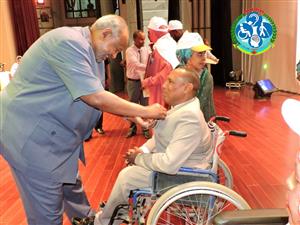
Government-led database for improved distribution of assistive technologies
The Djibouti National Agency for Persons with Disabilities launched a management information system in 2019 whereby individuals can register and then access various forms of support through a Mobility Inclusion Card. By 2022, 4,466 people had been registered.
Agence Nationale des Personnes Handicapées, Management Information System for Persons with Disabilities (SIGPH), Djibouti -
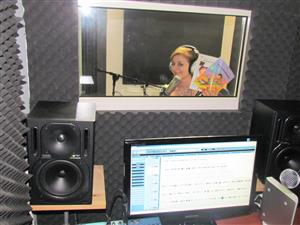
International online audio-book library in Arabic language
The International Accessible Library is a free online resource containing a wide range of literature and educational materials in audio format. The library contains over 4,500 professionally recorded audio books in Arabic that can be accessed by persons with visual and print disabilities worldwide, and it receives over 200,000 visits per month.
AlManarah Association for Persons with Disabilities, Israel
- Page 1
- Page 2
- Page 3
- Page 4
- Page 5
- Page 6
- Page 7
- Page 8
- Page 9
- Page 10
- Page 11
- Page 12
- Page 13
- Page 14
- Page 15
- Page 16
- Page 17
- Page 18
- Page 19
- Page 20
- Page 21
- Page 22
- Page 23
- Page 24
- Page 25
- Page 26
- Page 27
- Page 28
- Page 29
- Page 30
- Page 31
- Page 32
- Page 33
- Page 34
- Page 35
- Page 36
- Page 37
- Page 38
- Page 39
- Page 40
- Page 41
- Page 42
- Page 43
- Page 44
- Page 45
- Page 46
- Page 47
- Page 48
- Page 49
- Page 50
- Page 51
- Page 52
- Page 53
- Page 54
- Page 55
- Page 56
- Page 57