Search Results
Search
Filter results
Advanced Filters
Your search returned 379 Solutions
-
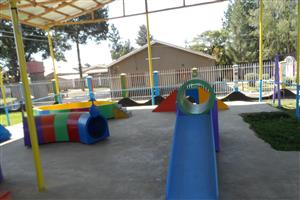
Children-led accessibility audits identifying barriers and renovation needs in schools
Children lead accessibility audits in schools and co-design renovations with professionals, adding ramps, handrails, accessible toilets and signage. From 2022 to mid‑2025, 22 public primary schools were upgraded. 65 children (30 with disabilities) were trained and attendance of children with disabilities rose 23%.
Child Support Tanzania, Children-Led Accessibility Audits, Tanzania -
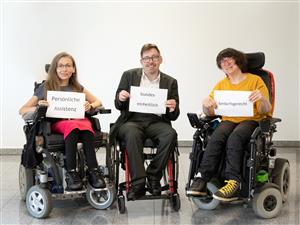
Facilitating personal assistance service provision to persons with disabilities
WAG Assistenzgenossenschaft (WAG), an Austrian non-profit cooperative founded by people with disabilities, has been operating a personal assistance service model since 2002. The model allows high flexibility for the beneficiaries, and WAG acts as a legal employer for 685 assistants as of 2022.
WAG Assistenzgenossenschaft, Cooperative personal assistance model in Austria, Austria -
Municipality-funded work coaches for people with disabilities
The service provides individual work coaching for people with disabilities. It is free of charge and aims to find full or part-time employment for its users. The programme has had between 240 and 273 users per year for the last three years. The number of those who found a job increased to 342 in 2019.
City of Helsinki, Supported Employment Service, Finland -
Online accessibility training for civil servants
SENADIS, the National Disability Service of Chile, launched an online accessibility training programme for civil servants, called Preparados para Incluir, that offered three courses centred around accessibility, its legal framework, general principles, and access to ICT.
Preparados para Incluir (Ready to Include), Chile -
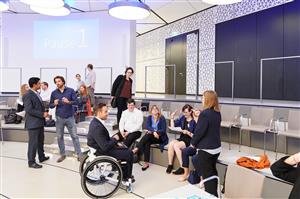
Job-matching based on coaching for students with disabilities and company-partnering
The participating talents receive coaching and make contact with interested companies. Companies gain know-how in the field of inclusion and employment of people with disabilities. Since the start of the programme in 2016, 130 students and 45 companies have completed the self-financed programmes.
myAbility Social Enterprise GmbH, myAbility Talent® Programme, Austria -
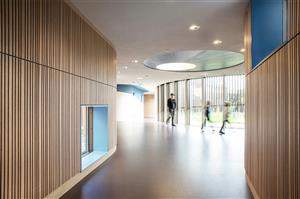
Sensory and calming school architecture improving well-being for students and staff
Heerup School was rebuilt 2021–2024 as a sensory‑adapted, inclusive school (1,610 m² building, 4,100 m² outdoor). Calming materials, simplified layouts and new furniture cut physical disputes and staff sick days by 50% and student isolation by 30%.
Heerup School, Heerup School, Denmark -
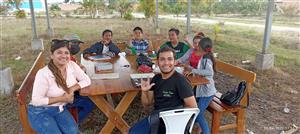
Training family groups in remote Amazon villages to use sign language and to replicate it
Paz y Esperanza, Peru: Offers courses in Peruvian Sign Language and Spanish for families with deaf children in the Amazon region. In 2023, 60 participants, including both children and adults.
Peace and Hope Diaconal Ministry Association, Peruvian Sign Language for disadvantaged deaf people, Peru -

Empowering young people affected by armed conflict with training and job opportunities
SOPRODE in Congo trains conflict-affected youth in vocational skills. Between 2020-2024, 485 trained (186 with disabilities), 24 found jobs, and 76 started businesses in agriculture, tailoring, and more.
Solidarity for the Protection of the Rights of the Child, SOPRODE ASBL, Empowering vulnerable young people through vocational training and employment opportunities, Congo -

Multidisciplinary culture centre operated by a majority of employees with sensory disabilities
Na Laga’at, a cultural centre in Israel, employs over 100 staff, 70% with sensory disabilities. Its theatre, restaurant, and workshops have hosted 1M+ visitors since 2007, promoting vocational training.
Na Laga’at Center for Inclusive Culture, The Na Laga’at Center, Israel -
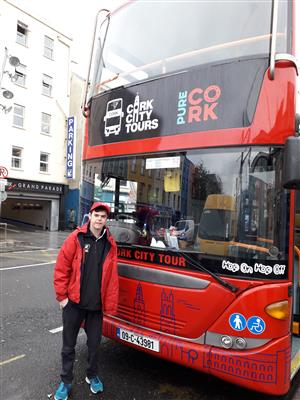
Assigning job coaches for young jobseekers with intellectual disabilities
Job coaches assist young people with an intellectual disability or autism to find paid employment. Job seekers contribute to the planning and delivery of the programme. Between 2018 and 2020, 69 people were registered and 37 people have been placed in supported employment jobs.
COPE Foundation, Ability@Work, Ireland