Search Results
Search
Filter results
Advanced Filters
Your search returned 562 Solutions
-
Support in transition to adult life
The School-to-Community Transition Initiative aims to improve the quality of transition planning and transition services for people with intellectual and developmental disabilities. This goal is achieved by identifying successful programmes that can be replicated nationwide within The Arc’s network of local and state chapters.
The Arc of the United States, Support in transition to adult life, United States of America -
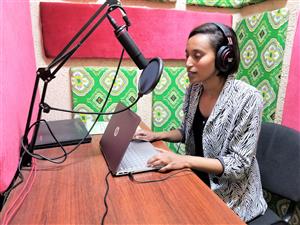
Mobile phone-based information service for disability-related topics
Minch was launched in 2021 by the Ethiopian Center for Disability and Development. The interactive voice-response phone platform provides toll-free audio information or text messages on disability-related topics in the Ethiopian national language. Minch works via cell phone and without the need for an Internet connection.
ECDD - Ethiopian Center for Disability and Development, Minch, Ethiopia -
Escola de Gente is a theatre project that works on the full inclusion of persons with disabilities not only by enabling them to visit and enjoy theatre, but also by actively participating in creating an inclusive culture by publishing all kind of accessible material and advocating for an inclusive education system.
Escola de Gente enables actors and audience members with and without disabilities to participate in and enjoy theatre. The stories told on stage address themes like discrimination and inclusion. Descriptive subtitling, sign language interpreters, audio description, programs in Braille and multimedia materials play an essential part.
Escola de Gente - Communication in inclusion, Cultural inclusion through accessible theatre, Brazil -

National state-run training and job-placement programme for people with disabilities
The Format for Work, Disability Line programme offers people with disabilities theoretical and practical vocational training and then placement in dependent employment. The programme was launched in 2014. Between 2015 and by 2020 there were a total of 9,929 users, of whom 7,995 completed their training.
SCENE Chile - National Training and Employment Service, Training for Work, Chile -
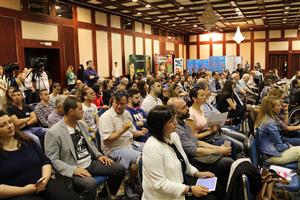
Comprehensive job-creation model from East Europe expanding internationally
The self-funded programme assists people with disabilities to acquire soft skills and professional abilities. Jamba also works with employers and operates a job matching platform. Launched in 2017, by 2020 Jamba has trained more than 590 people, has 58 partner organizations, and has more than 2,000 candidates in its database.
JAMBA - Career for All, JAMBA - Career For All, Bulgaria -
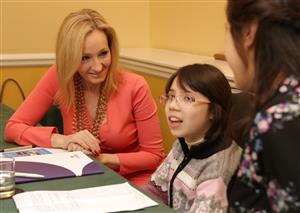
Changing a whole country´s approach on children´s institutions
Together with the Moldovan Government, Lumos has promoted an integrated policy and programme of deinstitutionalisation. Since launching the programme in 2007, the number of children in institutions has dropped by 86 per cent and since 2010, more than 6,000 children have been admitted to inclusive mainstream school.
Lumos Foundation, Moldova -
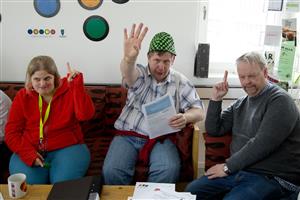
Study circles for persons with intellectual disabilities to engage in voting
Small study circle groups learn from easy-read materials and DAISY-formatted audio texts that describe Swedish democracy and the voting process. A group leader assists by fielding questions to politicians and arranging discussions. For the 2018 election there were 109 study circles, totalling some 650 people in 80 municipalities.
SV Study Association Vuxenskolan, My choice/My election, Sweden -
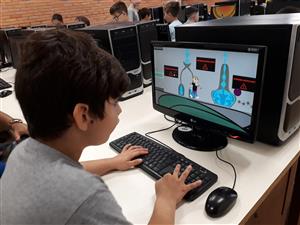
Digital game design by children with and without intellectual disabilities
Through the framework of the "I’ve made my game", children with and without disabilities are encouraged to create digital games together. This collaborative process allows children to be involved in intellectual and affective activities of negotiation, ideas development, results analysis, and interaction.
Univali - University of Itajai Valley, Digital Game Design, Brazil -
Ongoing support through a job trainer
The programme assists individuals with intellectual disabilities requiring support with accessing employment and performing job duties. The programme is characterised by the Employment First approach, providing a job trainer only when the employer offers a meaningful job and pays at least a minimum salary.
Government of Newfoundland and Labrador, Ongoing support through a job trainer, Canada -
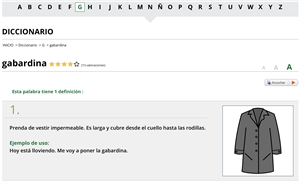
Free online Spanish dictionary written according to easy reading guidelines
Diccionario Fácil is a free online Spanish dictionary service developed by Plena Inclusion Madrid, an NGO. It provides definitions according to the Easy Reading Guidelines, validated by people with intellectual disabilities, and also providing employment opportunities for them.
Plena Inclusion Madrid, Diccionario Fácil – Easy Dictionary, Spain
- Page 1
- Page 2
- Page 3
- Page 4
- Page 5
- Page 6
- Page 7
- Page 8
- Page 9
- Page 10
- Page 11
- Page 12
- Page 13
- Page 14
- Page 15
- Page 16
- Page 17
- Page 18
- Page 19
- Page 20
- Page 21
- Page 22
- Page 23
- Page 24
- Page 25
- Page 26
- Page 27
- Page 28
- Page 29
- Page 30
- Page 31
- Page 32
- Page 33
- Page 34
- Page 35
- Page 36
- Page 37
- Page 38
- Page 39
- Page 40
- Page 41
- Page 42
- Page 43
- Page 44
- Page 45
- Page 46
- Page 47
- Page 48
- Page 49
- Page 50
- Page 51
- Page 52
- Page 53
- Page 54
- Page 55
- Page 56
- Page 57