Search Results
Search
Filter results
Advanced Filters
Your search returned 883 Solutions
-
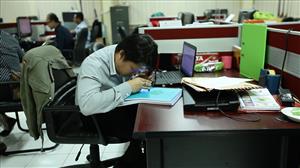
A variety of approaches to create jobs for people with visual impairments
The first phase started in 2007 and focused on technology to increase the learning potential of students with visual impairments. From 2012 to 2013, the emphasis was on vocational preparation, technological applications and advocacy for inclusive universities. 117 people found employment through the programme.
ICEVI - International Council for Education of People with Visual Impairment, Nippon Foundation Higher Education Project, Cambodia -
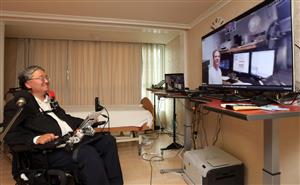
A computer mouse steered with the mouth
With the IntegraMouse a computer can be operated with the use of one’s mouth, whereby minimal movements of the lips are enough to move a cursor. The IntegraMouse was developed for people with paraplegia, myasthenia, motoric nerve diseases, and amputations and is seen as a full-value replacement for a conventional computer mouse.
LIFEtool, Austria -

Accessible eBook library with over 775,000 books in 47 languages
Benetech’s software platform renders books and other print materials into five accessible digital formats.The organization works with 900 publishers and NGOs. Membership in Bookshare is free for eligible US students, while individuals from the US and other countries pay up to a maximum of USD 50 per year.
Benetech, Bookshare, United States of America -
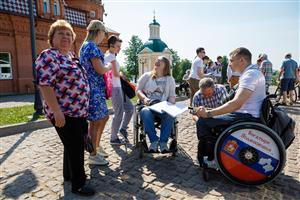
A social franchise model for accessibility experts
In 2015, the All-Russian Society of Disabled People (ARDS) began to conduct accessibility seminars throughout the country. In order to support many of the people it trains, the ARDS set up expert centres across Russia, offering advice and financial support. By 2019, some 480 experts were working in 64 of 85 regions of Russia.
All Russian Society of Disabled People, Certification in Accessibility Expertise, Russia -
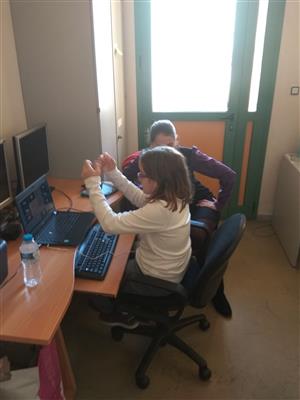
Free open-source electronic games for children
"Games for the Blind" is a series of free electronic games designed for blind children as well as an online platform to create and share their own game. The games are designed to familiarize children with computers and to allow them to practice their hearing and other skills while having the option to play with their peers.
SciFY - Science For You, Games for the Blind, Greece -
A free online ICT accessibility course, accessible by the blind and deaf
The ICT Accessibility Open Online Course (MOOC) is a six-week, 100-hour course taught by accessibility experts. The self-paced format encourages interaction between students and instructors. The project was initiated in 2016 and by 2017 7,636 enrollments from 169 countries had been received.
AMAC - Accessibility Solutions & Research Center, ICT Accessibility MOOC Education for All, United States of America -
Supporting schools to establish assistive technology labs for blind students
inABLE supports specialized schools to teach students who are blind in assistive and digital technologies. The NGO not only equips the necessary infrastructure, but also provides instructors and the training for teachers. For the students, inABLE has designed an assistive technology computer curriculum.
inABLE, inABLE Computer Labs, Kenya -
Inclusion in a virtual organisation
Genashtim delivers online education and support services, operated as a virtual organization with people working from home in five countries. For this reason it can effectively engage people with disabilities. In 2012 Genashtim had 60 people on its payroll, of whom 35 were persons with different disabilities.
Genashtim Innovative Learning Pte Ltd., Inclusion in a virtual organisation, Singapore -
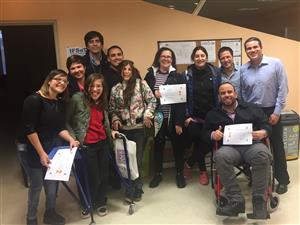
Job portal for persons with disabilities, going international
Incluyeme.com, launched in 2013, is Latin America's first and largest job portal for people with disabilities. It operates in eight countries and has more than 200,000 registered users in 2020. Incluyeme also provides training and services for companies that want to hire people with disabilities.
Incluyeme.com, Job portal for persons with disabilities, Argentina -
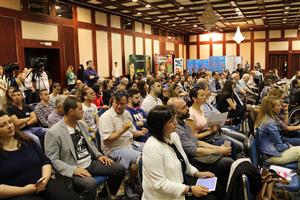
Comprehensive job-creation model from East Europe expanding internationally
The self-funded programme assists people with disabilities to acquire soft skills and professional abilities. Jamba also works with employers and operates a job matching platform. Launched in 2017, by 2020 Jamba has trained more than 590 people, has 58 partner organizations, and has more than 2,000 candidates in its database.
JAMBA - Career for All, JAMBA - Career For All, Bulgaria
- Page 1
- Page 2
- Page 3
- Page 4
- Page 5
- Page 6
- Page 7
- Page 8
- Page 9
- Page 10
- Page 11
- Page 12
- Page 13
- Page 14
- Page 15
- Page 16
- Page 17
- Page 18
- Page 19
- Page 20
- Page 21
- Page 22
- Page 23
- Page 24
- Page 25
- Page 26
- Page 27
- Page 28
- Page 29
- Page 30
- Page 31
- Page 32
- Page 33
- Page 34
- Page 35
- Page 36
- Page 37
- Page 38
- Page 39
- Page 40
- Page 41
- Page 42
- Page 43
- Page 44
- Page 45
- Page 46
- Page 47
- Page 48
- Page 49
- Page 50
- Page 51
- Page 52
- Page 53
- Page 54
- Page 55
- Page 56
- Page 57
- Page 58
- Page 59
- Page 60
- Page 61
- Page 62
- Page 63
- Page 64
- Page 65
- Page 66
- Page 67
- Page 68
- Page 69
- Page 70
- Page 71
- Page 72
- Page 73
- Page 74
- Page 75
- Page 76
- Page 77
- Page 78
- Page 79
- Page 80
- Page 81
- Page 82
- Page 83
- Page 84
- Page 85
- Page 86
- Page 87
- Page 88
- Page 89