Search Results
Search
Filter results
Advanced Filters
Your search returned 883 Solutions
-
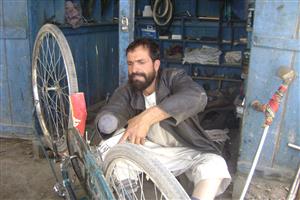
Providing bicycles and training to support income-generation activities
Since 2001, AABRAR has run a bicycle-training programme with a monthly intake of 20 participants. A trainer teaches the trainees how to repair and ride bicycles, which are modified by AABRAR's mechanics to accommodate the needs of the trainees' disabilities. By 2020, 7,000 people have been trained.
AABRAR - Afghan Amputee Bicylists for Rehabilitation and Recreation, Bicycle Training Programme, Afghanistan -
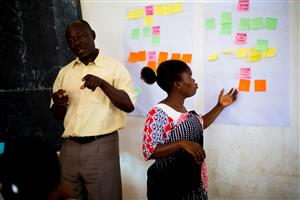
Training and online job-matching for students and graduates with disabilities
Since 2016, EmployAble Africa has been focusing on data and technology. There are online and mobile learning programmes for students and teachers, support for companies, and a job platform that works with trend analyses and auto-matching. In 2019, 560 persons were trained and 290 were placed.
Employable Africa, Envision Africa, Tanzania -
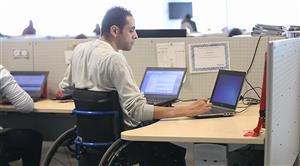
Large-scale support for employers who have to meet a quota of employees with disabilities
Helm assists employers by short-listing suitable candidates, identifying the required accommodations and ensuring that employees maintain their jobs by on-the-job training and regular follow-up with both the employee and employer. Between 2014 and 2017 Helm has worked with more than 250 companies.
Helm, Egypt -
Gateway to employment: opportunities not obstacles
The Telenor Open Mind programme duration is two years. In the first three months the individuals participate in a computer training course, as well as a course to develops social skills for the workplace. The following 21 months are work practice in Telenor in an area of their interest, allowing them to gain hands-on experience.
ASA Telenor, Gateway to employment: opportunities not obstacles, Norway -
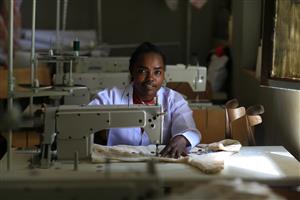
National guideline to make vocational training centres fully accessible
Published in 2019, the guideline is the first document in Ethiopia to set out measures for the equal participation of people with disabilities in "technical and vocational education and training" (TVET). By 2020, more than 30 government institutions have implemented the directive.
Ethiopian Federal TVET Agency, Guideline for inclusion of people with disabilities, Ethiopia -
Towards an accessible Province
Ontario wants to become a fully accessible province by 2025. The AODA-Act includes guidelines for public space design, employment, information and communication, transportation and customer service. The "Regulation on Integrated Accessibility Standards" (IASR) defines 200 concrete requirements.
Accessibility Directorate of Ontario, Canada – Province of Ontario – Accessibility for Ontarians with Disabilities Act (AODA), Canada -
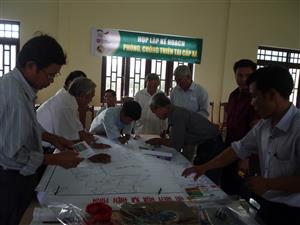
Widening effective participation of people with disabilities in community-based disaster risk management - that is the mission of this project run by Malteser International and local partners in Vietnam.
A manual on inclusive community-based disaster risk management was created to complement the national project of "Awareness Raising and Community-Based Disaster Risk Reduction" (CBDRM). A pilot project was launched in 47 villages in 6 communes of 3 district of Quang Nam province.
Malteser International, Manual on inclusive disaster risk management, Vietnam -
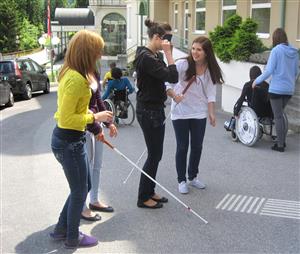
ÖZIV ACCESS offers comprehensive consultancy services and tailor-made solutions to companies that employ persons with disabilities.
ÖZIV ACCESS offers consultancy and solutions in the field of accessibility. Consultants advise in the fields of built environment, design, communications and social accessibility. Tailor-made training is also offered in order to increase sensitivity and advise a specific group of individuals, e.g. employees, in dealing with persons with disabilities.
OEZIV - Austrian Civil Invalid Association, One-stop-shop for Austrian employers, Austria -
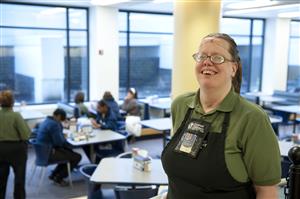
Three internships to provide a variety of career options
Project SEARCH prepares young people with intellectual disabilities for successful employment and job development. The programme takes place entirely within a business setting, providing students with three internships to allow them to explore a variety of career options. In 2016, the project operated 405 programmes worldwide.
Cincinnati Children's Hospital Medical Centre, Project SEARCH, United States of America -
Hospital internships as a strong bridge to the open labour market
Project SEARCH offers young people with intellectual disabilities an internship programme at Naas General Hospital. Over a nine-month period, the interns take part in different real job experiences and then seek employment. Following the first year, all interns who completed the programme found employment in the open labour market.
KARE - Promoting Inclusion for People with Intellectual Disabilities, Project SEARCH, Ireland
- Page 1
- Page 2
- Page 3
- Page 4
- Page 5
- Page 6
- Page 7
- Page 8
- Page 9
- Page 10
- Page 11
- Page 12
- Page 13
- Page 14
- Page 15
- Page 16
- Page 17
- Page 18
- Page 19
- Page 20
- Page 21
- Page 22
- Page 23
- Page 24
- Page 25
- Page 26
- Page 27
- Page 28
- Page 29
- Page 30
- Page 31
- Page 32
- Page 33
- Page 34
- Page 35
- Page 36
- Page 37
- Page 38
- Page 39
- Page 40
- Page 41
- Page 42
- Page 43
- Page 44
- Page 45
- Page 46
- Page 47
- Page 48
- Page 49
- Page 50
- Page 51
- Page 52
- Page 53
- Page 54
- Page 55
- Page 56
- Page 57
- Page 58
- Page 59
- Page 60
- Page 61
- Page 62
- Page 63
- Page 64
- Page 65
- Page 66
- Page 67
- Page 68
- Page 69
- Page 70
- Page 71
- Page 72
- Page 73
- Page 74
- Page 75
- Page 76
- Page 77
- Page 78
- Page 79
- Page 80
- Page 81
- Page 82
- Page 83
- Page 84
- Page 85
- Page 86
- Page 87
- Page 88
- Page 89