Search Results
Search
Filter results
Advanced Filters
Your search returned 707 Solutions
-
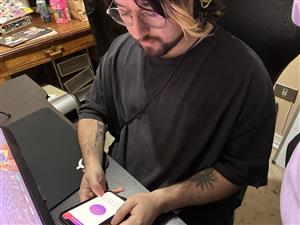
A comprehensive app supporting persons with autism in all situations
AutistApp is a free Spanish mobile app created by Melissa Muñoz‑Flández to support autistic adolescents and adults. It offers nine modules (pictograms, self‑regulation, education, situational mutism cards, job board), works offline and has 85,000+ downloads.
Prisma Neurodivergente SpA, AutistApp, Chile -
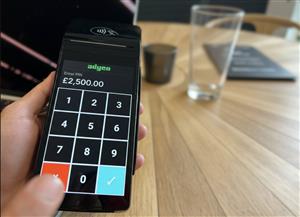
Cash terminals enabling persons with visual disabilities to make payments independently
Adyen’s Accessible Payment Terminal Audio Solution lets visually impaired shoppers make independent, secure payments on PIN-on-glass and physical pinpad devices. It provides real-time text-to-speech in 25+ languages, can be triggered by headphone, button or API, is cloud-activatable and has been widely deployed since 2024.
Adyen N.V., Accessible Payment Terminal Audio Solution, Netherlands -
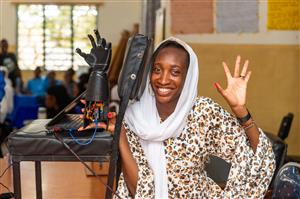
AI-trained robotic hand enabling real-time sign language translation for STEM subjects
Zerobionic builds an AI-trained, 3D-printed robotic hand that signs STEM content in real time for Deaf students. It translates in under 2 seconds with ≥92% accuracy, works offline, adapts to local sign dialects, costs about $350 in Kenya and is scaled via global partners.
Zerobionic, Zerobionic Robotic Hand, Kenya -

AI glasses for persons with visual impairments developed by technology leaders
Ray-Ban Meta AI glasses are hands-free, voice-controlled smart glasses that provide visual assistance via built-in AI and the Be My Eyes volunteer network. They help with wayfinding, object and label recognition, work without a phone, cost $299 and saw wide adoption since 2023.
Meta, Ray Ban Meta AI glasses, United States of America -
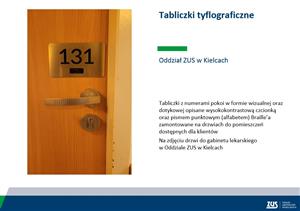
A social insurance institution making itself digitally accessibility for all citizens
ZUS Without Barriers is a public policy launched in 2019 to make Poland's Social Insurance Institution accessible to over 28 million people across 400 facilities. It upgraded buildings and digital services (WCAG, sign-language e-visits), removed 64% of 2,400+ barriers and increased staff with disabilities by 40%.
Social Insurance Institution (ZUS) , ZUS Without Barriers, Poland -
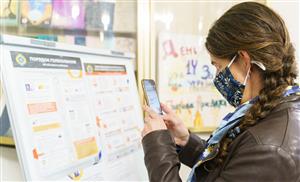
QR Codes used to inform voters who are blind or deaf about voting procedures
In the run-up to the 2020 local elections in Ukraine, the International Foundation for Electoral Systems (IFES) joined forces with the Central Election Commission of Ukraine to develop information posters with QR codes. These were linked to audio and sign language formats and were used by approximately 6,000 people.
International Foundation for Electoral Systems (IFES), Accessible Voter Education in Ukraine, Ukraine -
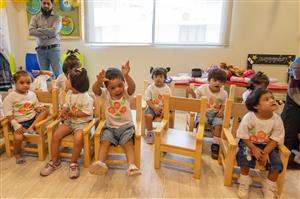
Two programmes that enable young children with Down syndrome to attend mainstream schools
KDSP, Pakistan: Created Early Preschool Experience and Inclusive Education Programs in 2017 for children with Down syndrome. By 2022, the number of children supported in mainstream school had risen to 69.
KDSP - A Down Syndrome Organisation, Education for Individuals with Down syndrome, Pakistan -
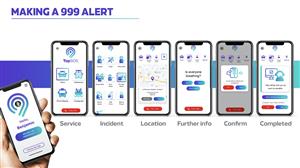
Making the national emergency telephone line useable for non-verbal communication
TapSOS is the UK’s first accredited non‑verbal 999 app enabling Deaf, speech‑impaired, neurodivergent users and people at risk to contact emergency services. It sends multilingual, GPS‑tagged alerts, shares profiles securely with responders, uses end‑to‑end encryption and had 3,000+ downloads by 2024.
TapSOS, United Kingdom -
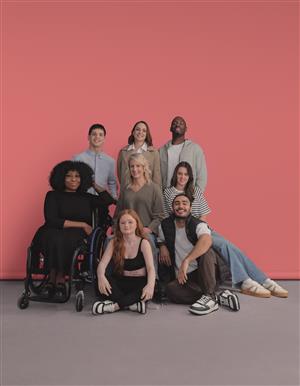
Global retail chain offering adaptive and affordable clothing for all
Primark Adaptive is a clothing range for disabled people, with magnetic closures, waist loops and friction-free fabrics. Sold in physical stores and through Click & Collect in Great Britain, it forms part of Accessible Primark, which also covers stores, employment and representation.
Primark, Primark Adaptive, United Kingdom -
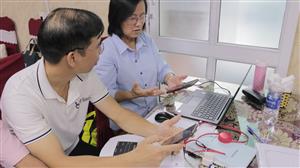
Co-designed accessible disaster database for households with disabilities in rural areas
Pilot in My Duc (2024) built an accessible digital spatial database mapping 536 households and 58 facilities to record disability types and accessibility. 23 trainees collected 594 data points. Data was integrated into VNDMS for real-time use. Funded by a $14,000 Swiss grant.
Hanoi Association of People with Disabilities, Disability-Inclusive Disaster Data Initiative (DIDDI), Vietnam
- Page 1
- Page 2
- Page 3
- Page 4
- Page 5
- Page 6
- Page 7
- Page 8
- Page 9
- Page 10
- Page 11
- Page 12
- Page 13
- Page 14
- Page 15
- Page 16
- Page 17
- Page 18
- Page 19
- Page 20
- Page 21
- Page 22
- Page 23
- Page 24
- Page 25
- Page 26
- Page 27
- Page 28
- Page 29
- Page 30
- Page 31
- Page 32
- Page 33
- Page 34
- Page 35
- Page 36
- Page 37
- Page 38
- Page 39
- Page 40
- Page 41
- Page 42
- Page 43
- Page 44
- Page 45
- Page 46
- Page 47
- Page 48
- Page 49
- Page 50
- Page 51
- Page 52
- Page 53
- Page 54
- Page 55
- Page 56
- Page 57
- Page 58
- Page 59
- Page 60
- Page 61
- Page 62
- Page 63
- Page 64
- Page 65
- Page 66
- Page 67
- Page 68
- Page 69
- Page 70
- Page 71