Search Results
Search
Filter results
Advanced Filters
Your search returned 883 Solutions
-
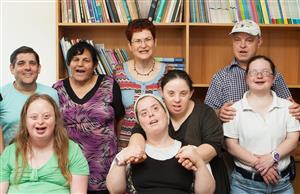
Persons with intellectual disabilities becoming self-advocates in politics
Beit Issie Shapiro (BIS) and Israel Elwyn, both from Israel, launched a self- and collective-advocacy and leadership development programme for people with intellectual disabilities in 2011. By 2022 the number of self-advocates increased from 20 to 150, and the Israeli government regularly requests their input.
Beit Issie Shapiro, A self and collective advocacy and leadership development programme for people with Intellectual Disabilities, Israel -
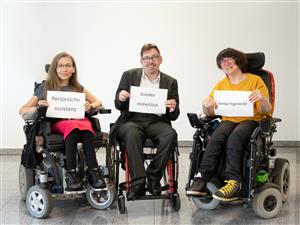
Facilitating personal assistance service provision to persons with disabilities
WAG Assistenzgenossenschaft (WAG), an Austrian non-profit cooperative founded by people with disabilities, has been operating a personal assistance service model since 2002. The model allows high flexibility for the beneficiaries, and WAG acts as a legal employer for 685 assistants as of 2022.
WAG Assistenzgenossenschaft, Cooperative personal assistance model in Austria, Austria -
Making African universities and other learning institutes more disability-inclusive with a free web-based toolbox
Light for the World, Austria: Its CapAble platform provides tools and resources for disability inclusion in higher education. Gained over 30,000 users and 240,000 page views between 2021 and 2023.
CapAble, Uganda -
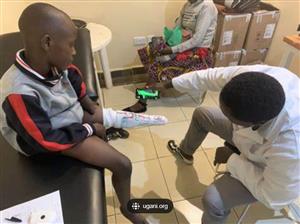
Local 3D production of high-quality, low-cost prosthetics in low-income countries
Ugani Prosthetics, Belgium: Develops affordable prosthetics for low-income countries using 3D printers and smartphones. Trained technicians and established workshops, helping over 100 patients in five countries from 2021 to 2023.
Ugani Prosthetics, Kenya -
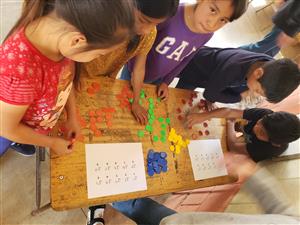
Empowering inclusive education with ICT integration
ADISA and CBM's Inclusive Education Programme, Guatemala: Promotes inclusive education through Universal Design for Learning (UDL). Between 2022 and 2023, trained 500 teachers and 400 parents, benefiting 800 children in ten schools.
Promoting inclusive education in Guatemala through the development of a Universal Design for Learning (UDL), Guatemala -
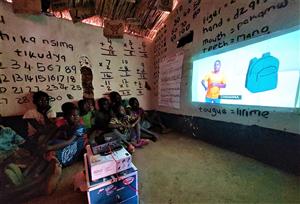
International NGO using digital books with sign language and audio for all children
World Vision Malawi's Timwerenge 365 Digital Books Project: Offers accessible digital books for children's literacy, including 60 with Malawian Sign Language. In 2023, extended to schools for the deaf throughout the country.
Timwerenge 365 (T365) Digital Books Project , Malawi -
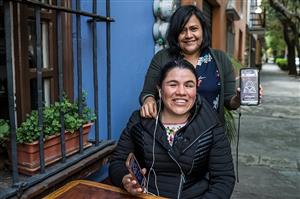
An app and a movement to combat gender-based violence against women with disabilities
CIDIP's App Morada, Mexico: Prevents gender-based violence with a video call-hotline for women with disabilities. Since 2020, used by 25,000 women, leading to a nationwide Purple App Movement.
App Morada , Mexico -
E-government automatically transferring disability benefits without any bureaucracy
Ministry of Labour and Social Protection, Azerbaijan: Implemented a reverse system for disability benefits and pensions, automating verification and payment processes. Benefited over 46,800 persons with disabilities from 2020 to 2023.
e-government, Azerbaijan -
Access to education for refugee children with disabilities
The mission of this project is to improve the access to education for children with disabilities in the refugee camp of Gihembe (rural area) as well as in the town of Kigali (urban area) in Rwanda. After a pilot study, the initiative will share the results with its main partners, who are working on refugee issues in Rwanda.
IRD - Initiative for Refugees with Disabilities, Rwanda -
Creating a role model for Tanzania`s Inclusive Education policy
The project seeks to model Tanzania’s National Strategy on Inclusive Education by initiating systematic changes in education in three districts. These changes will influence school management, teacher training, and pupil support, as well as raise awareness and ensure that families and the communities are involved.
ADD International - Action on Disability and Development, Tanzania
- Page 1
- Page 2
- Page 3
- Page 4
- Page 5
- Page 6
- Page 7
- Page 8
- Page 9
- Page 10
- Page 11
- Page 12
- Page 13
- Page 14
- Page 15
- Page 16
- Page 17
- Page 18
- Page 19
- Page 20
- Page 21
- Page 22
- Page 23
- Page 24
- Page 25
- Page 26
- Page 27
- Page 28
- Page 29
- Page 30
- Page 31
- Page 32
- Page 33
- Page 34
- Page 35
- Page 36
- Page 37
- Page 38
- Page 39
- Page 40
- Page 41
- Page 42
- Page 43
- Page 44
- Page 45
- Page 46
- Page 47
- Page 48
- Page 49
- Page 50
- Page 51
- Page 52
- Page 53
- Page 54
- Page 55
- Page 56
- Page 57
- Page 58
- Page 59
- Page 60
- Page 61
- Page 62
- Page 63
- Page 64
- Page 65
- Page 66
- Page 67
- Page 68
- Page 69
- Page 70
- Page 71
- Page 72
- Page 73
- Page 74
- Page 75
- Page 76
- Page 77
- Page 78
- Page 79
- Page 80
- Page 81
- Page 82
- Page 83
- Page 84
- Page 85
- Page 86
- Page 87
- Page 88
- Page 89