Search Results
Search
Filter results
Advanced Filters
Your search returned 883 Solutions
-
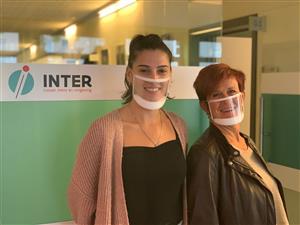
NGO supporting the government with an accessible response to the pandemic
The Belgian NGO Inter has developed measures to address the isolation of people with disabilities during the pandemic. These include guidelines for social distancing and accessibility of vaccination centres as well as the online platform Circuit Sortie, which brings together both people with and without disabilities for activities in small groups.
Inter Vlaanderen, Fighting Isolation During the Pandemic, Belgium -
Inclusive care worker training
Within the scope of the EU project "Inclusive Care Worker", an inclusive teaching model for qualification in the social sector and support modules for a successful integration into the labour market were developed. It enables persons with learning difficulties and disabilities to choose a care profession.
Lebenshilfe Graz and Surroundings - Voitsberg, Inclusive care worker training, Austria -

Promoting self-employment in agriculture and aquaculture by training and microfinance
DRRA’s ‘Jibika’ project supports people with disabilities in the rural districts of Sathkhira and Jhenaidah to run their own vegetable or crab farming businesses by providing training and microfinance. Between 2017 and mid-2020, 514 people with disabilities were involved in running their own businesses.
DRRA - Disabled Rehabilitation and Research Association, JIBIKA, Bangladesh -
Job support for persons with intellectual disabilities
Centum DZWONI is a countrywide initiative, started in 2006, and was the first "non-public" employment agency in Poland. It aims at finding positions in the open labour market for persons with intellectual disabilities. The services are free and include counselling, training, practice and individual support by a job coach.
Centrum DZWONI - Center for Vocational Counseling and Support for People with Intellectual Disabilities, Job support for persons with intellectual disabilities, Poland -
Public-Private-Partnership connecting jobseekers with disabilities to employers
The aim of the initiative is to build partnerships to connect people with disabilities with meaningful, livelihood-securing jobs. Jobseekers are assisted in their employment goals, while companies are connected with pre-screened, qualified candidates and are provided with support for diversity hiring.
MOPD NYC - Mayor's Office for People with Disabilities New York, NYC: ATWORK, United States of America -
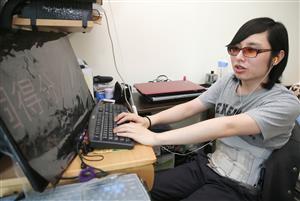
A bank uses its networks to create career options for persons with visual impairments
A Corporate Advisory Council was formed of managers who help to create jobs and promote the employability of people with visual impairments. Local NGOs created an integrated platform to improve the listing and hiring process. Between 2013 and 2016, 388 people were supported and 250 were successfully employed.
Standard Chartered Bank, Taiwan, Project “Seeing is Believing”, Taiwan -
The Home from Home Apartment offers fully accessible accommodation with aids and appliances to persons with physical and sensory disabilities and their families. It offers independent living in a non-clinical setting for short breaks and general health appointments in Dublin.
Home from Home is a non-clinical setting offering persons with disabilities and their families the chance to stay overnight without having to stay at the hospital. The apartment was designed by persons with disabilities. It offers ceiling track hoists in the bedrooms and provides a fully equipped kitchen and a lounge area.
Muscular Dystrophy UK, Changing Places Consortium, Staying away from home in a non-clinical setting, Ireland -
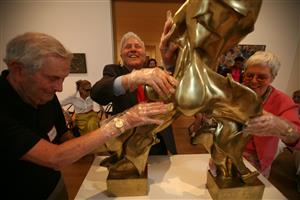
The fully accessible art museum
MoMA offers a variety of programmes and services to ensure the accessibility of the museum and its collection,including tours for visually impaired that provide the opportunity to touch and experience the art or programmes for visitors with dementia. Approximately 60,000 people made use of the offer from 2014 to 2016.
MOMA - Museum of Modern Art, United States of America -
The professionalisation of empowerment
Peer counsellors have their own experience of disability and advise similarly affected people to enable them to take control of their own lives at home, in the community and at work. For the first time in the world, the province of Upper Austria has established peer counselling as a social profession.
Office of the Upper Austrian Provincial Government, Department of Social Affairs, The professionalisation of empowerment, Austria -
The transportation and consultancy service enables young persons with disabilities to participate actively in society. The association helps the students to handle bureaucratic tasks and receive exemption from tuition fees.
Through this service young persons with disabilities are enabled to participate actively in society and develop their potential. The service is free of charge and resulted in an increased number of students with disabilities, full participation in academic life as well as enhancement of their visibility in the local community.
Association of Youth with Disabilities of Montenegro, Transport service for students in Montenegro, Montenegro
- Page 1
- Page 2
- Page 3
- Page 4
- Page 5
- Page 6
- Page 7
- Page 8
- Page 9
- Page 10
- Page 11
- Page 12
- Page 13
- Page 14
- Page 15
- Page 16
- Page 17
- Page 18
- Page 19
- Page 20
- Page 21
- Page 22
- Page 23
- Page 24
- Page 25
- Page 26
- Page 27
- Page 28
- Page 29
- Page 30
- Page 31
- Page 32
- Page 33
- Page 34
- Page 35
- Page 36
- Page 37
- Page 38
- Page 39
- Page 40
- Page 41
- Page 42
- Page 43
- Page 44
- Page 45
- Page 46
- Page 47
- Page 48
- Page 49
- Page 50
- Page 51
- Page 52
- Page 53
- Page 54
- Page 55
- Page 56
- Page 57
- Page 58
- Page 59
- Page 60
- Page 61
- Page 62
- Page 63
- Page 64
- Page 65
- Page 66
- Page 67
- Page 68
- Page 69
- Page 70
- Page 71
- Page 72
- Page 73
- Page 74
- Page 75
- Page 76
- Page 77
- Page 78
- Page 79
- Page 80
- Page 81
- Page 82
- Page 83
- Page 84
- Page 85
- Page 86
- Page 87
- Page 88
- Page 89