Search Results
Search
Filter results
Advanced Filters
Your search returned 288 Solutions
-
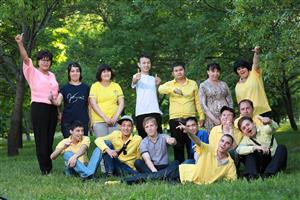
Teaching reading and writing to adults with intellectual disabilities in institutions
The Ed-Recovery Academy focuses on people with intellectual disabilities living in psychiatric institutions who do not have literacy skills and teaches them reading, grammar and mathematics. The teaching is done through an easy-to-read methodology and by incorporating life skills into the curriculum.
Psychoanalytic Association, Ed-Recovery Academy, Kazakhstan -
Diverting EU funds towards community-based care
The European Expert Group was established to support the EU in promoting care reforms. It includes a wide range of stakeholders, providing training, guidance, and tools to political representatives and governments to inform them about the need of community-based care and the risks of institutional care for persons with disabilities.
Lumos Foundation, United Kingdom -
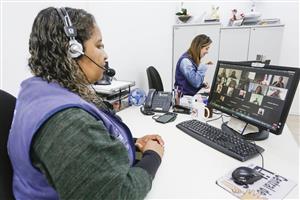
A city organizing weekly conversations in public spaces with citizens in sign language
To support the dissemination of the Brazilian sign language Libras, the city of Curitiba created Conversation in Libras launched the Conversation in Libras programme, offering weekly face-to-face meetings in its public spaces that improve the interaction and communication in Libras, the Brazilian sign language.
Curitiba City Hall, Conversation in Libras, Brazil -
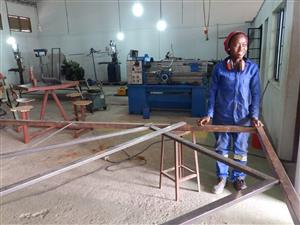
Making training centres accessible
With the advice of Light for the World, Young Africa Mozambique has adapted their already existing training schedules by reducing the barriers to enable young people with disabilities to study with their peers. Two new accessible hostels were constructed to accommodate 128 young people, one existing hostel was renovated.
Young Africa, Mozambique -
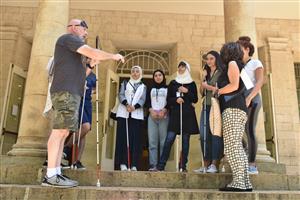
Empowerment of youth with disabilities involving their families and communities
ETI primarily focuses on young people with visual impairments, offering life-skills training in group and one-to-one settings, parent workshops, and other community activities to promote social inclusion. ETI also works with relief agencies to ensure that young refugees with disabilities can also access its programmes.
ETI - Empowerment Through Integration, Lebanon -
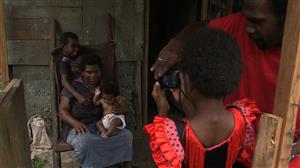
Giving a voice to children with disabilities
The project seeks to develop a simple and effective method for children with disabilities to express or communicate their life priorities and human rights issues. Therefore project team developed a set of inclusive tools to overcome barriers in verbal or oral communication and made these available on the project website.
Deakin University, Australia -
Jobs in kindergartens and elder care for persons with intellectual disabilities
The project organizes supported long-term traineeships for adults with intellectual disabilities in such areas as kindergarten supervision and elder care so these individuals can access the open labour market.The internships last for 14 weeks, during which each trainee must work at least three hours a week.
Konekt vzw, Belgium -
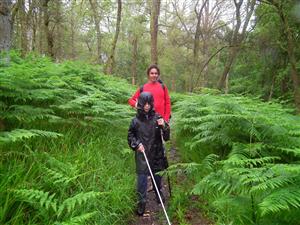
Teaching the clicking of tongue technique to navigate
World Access for the Blind trains blind and visually impaired persons the technique of human echolocation and calls its training Flashsonar (quite like the navigation of bats). The technique allows people to navigate using tongue-clicking and by responding to the reflected sound from their surroundings.
World Access for the Blind, Flashsonar, United States of America -
Making microfinance inclusive
Creer is a loan product designed to reach persons with disabilities. Technically the product is the same as a standard microcredit product. After its start-up in April 2010, the product in 2013 had around 400 clients, which is considerably above industry average, while the portfolio at risk is only slightly above the average.
Banco D-Miro, Making microfinance inclusive, Ecuador -
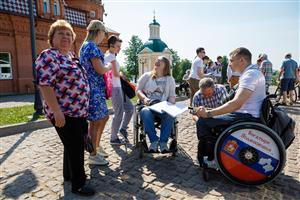
A social franchise model for accessibility experts
In 2015, the All-Russian Society of Disabled People (ARDS) began to conduct accessibility seminars throughout the country. In order to support many of the people it trains, the ARDS set up expert centres across Russia, offering advice and financial support. By 2019, some 480 experts were working in 64 of 85 regions of Russia.
All Russian Society of Disabled People, Certification in Accessibility Expertise, Russia