Search Results
Search
Filter results
Advanced Filters
Your search returned 194 Solutions
-

Introduction of the personal assistance model
In 2016 the Phnom Penh Centre for Independent Living (PPCIL) introduced the first personal assistance model for people with severe disabilities in Cambodia. Between 2016 and 2018, more than 300 people with disabilities have benefitted from the PPCI programme, , which is to become a national policy.
Phnom Penh Center for Independent Living, Cambodia -
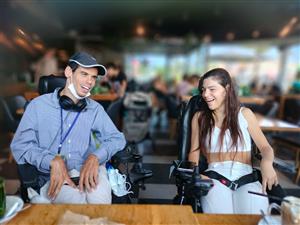
Supported housing for persons with complex disabilities
JDC Israel Unlimited’s ‘Expanded Supported Housing’ programme supports adults with severe disabilities aged 21–55 to live independently. The services include help finding an apartment, actualizing rights, budgeting, cultivating autonomy, and building independent life skills as well as ongoing support.
Expanded Supported Housing, Israel -

Strengthening local resilience with inclusive innovation and collective action
IDEAKSI is an inclusive innovation programme launched in 2021 by YAKKUM Emergency Unit. It helps people with disabilities and marginalized groups lead local disaster-preparedness solutions. It supported 26 innovations reaching 29,000 people and raised over $1 million in grants.
YAKKUM Emergency Unit, IDEAKSI, Indonesia -

Automated conversion of text into inclusive Braille within in the same document
Boltay Huroof developed software that prints ink and Braille together and converts Arabic, English, Urdu and other texts into Braille. It halves Braille production time. Since 2022 it made 300,000 documents, reached 500 users, worked with 10 schools and six banks, earning $100,000.
Boltay Huroof, Inclusive Braille Software, Pakistan -

A large e-commerce platform supporting retailers with disabilities
Taobao’s 10,000 Merchants Programme helps entrepreneurs with disabilities sell online. Launched in 2023 with Alibaba Foundation support, it offers free e-commerce training, digital tools, accessibility features and community support. By June 2025 over 5,000 merchants were supported.
Alibaba Foundation, 10,000 Merchants Programme, China -

Accessible mobile cash transfer ensures humanitarian aid for persons with disabilities
CBM's 2020 inclusive mobile cash programme used bKash after Cyclone Amphan to reach 3,198 households, including 1,120 with disabilities. 78% accessed formal financial services for the first time. Households received disability top-ups; average cost €60; funded €192,000.
CBM Christoffel-Blindenmission Christian Blind Mission e.V. (CBM), Inclusive Mobile Cash Transfer for Humanitarian Aid, Bangladesh -

Streamlining parking permit access for persons with disabilities in the UAE
The UAE Digital Parking Permit provides a single online gateway for people with disabilities to apply, renew and manage permits across all seven emirates. It cut approvals from weeks to minutes, issued over 13,800 permits since 2023, has >92% satisfaction and is government-funded.
Zayed Authority for People of Determination, UAE Digital Parking Permit, United Arab Emirates -

Large DPO supporting the business sector with regional inclusion centres
NOWPDP in Pakistan created a capacity-building programme for employers. Between 2016-2023, it created 1,400 jobs, collaborated with major firms, and established inclusive standards in the banking sector.
Centre of Excellence for Financial Inclusion (CEFI), Pakistan -

Free learning tool for visually impaired persons to improve their computer skills
The EYE Tool is a self-learning tool that teaches visually impaired people digital skills to prepare them for computer-based workplaces. Users can choose from over 400 exercises, participate in job role simulations, receive feedback, and test their progress. EYE Tool has over 10,000 users in 15 countries.
Enable India, Educate Yourself Easily (EYE) Tool, India -
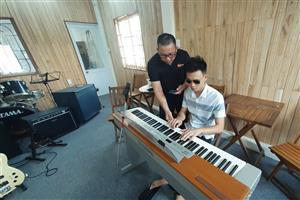
Blind programmers developing free software for blind users
In 2015 the Sao Mai Vocational & Assistive Technology Center for the Blind started developing software for blind users. By 2020 three products were released and are available free of charge: SM Braille, the Burmese TTS engine, and the SM Music Reader. The positive response is reflected in the increasing number of monthly downloads.
Sao Mai Center for the Blind, Vocational and Assistive Technology Center for the Blind, Vietnam