Search Results
Search
Filter results
Advanced Filters
Your search returned 190 Solutions
-
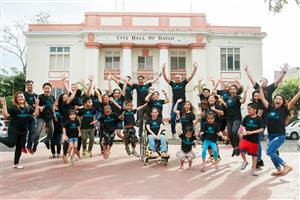
Training persons with disabilities in the Philippines to work as digital freelancers
The 10-week programme includes demand-driven digital skills training, work-based learning, and employment support. Virtualahan also employs its own graduates to work as online outsourcing professionals. Since 2015 more than 400 people have graduated from the programme and 78 per cent have found employment.
Virtualahan Inc., Virtualahan, Philippines -
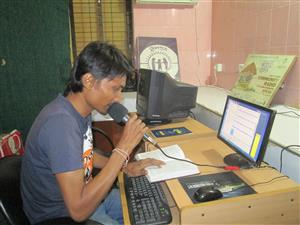
Providing accessible books and learning materials to blind students
The project uses globally accepted standards and open source technology to convert books into audio formats, while also partnering with other organizations to make existing audiobooks available. Students can access either e-books or audio versions of books, making it a cost-effective solution for accessing educational reading material.
YPSA - Young Power in Social Action, Audiobook Programme, Bangladesh -
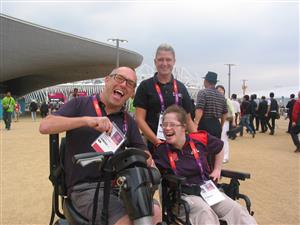
NATIONAL E-ACCESSIBILITY POLICY
Qatar’s National eAccessibility Policy faces the fact that Arabic did not feature in assistive technology and helps to reduce a number of the most severe barriers. It lays the foundation for an accessible ICT ecosystem by introducing assistive technology solutions in Arabic, providing support for people with disabilities and training for professionals.
Qatari Ministry of Information and Communication Technology of Qatar, Comprehensive eAccessibility policy, Qatar -
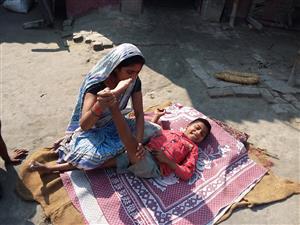
E-Health improving the quality of services for children with disabilities in the rural area
Sambhav is a web/app solution introduced by Jan Vikas Samiti, an NGO based in Northern India. It supports community-based rehabilitation services for children with developmental disabilities in rural communities, in partnership with local organizations, local health workers who are trained and supported remotely by specialists.
JAN VIKAS SAMITI, Project Sambhav, India -
eSpeak is a compact open source software speech synthesizer for Linux, Windows, and other platforms. Based on an existing text-to-speech-software, eSpeak made it accessible to 12 Indian languages.
eSpeak is a Text-To-Speech system that addresses the crucial gap by providing a voice translation tool in Indian local languages. eSpeak can be used in combination with screen readers on computers, as well as on mobile phones. Being an open-source software tool, it is affordable and compatible with other software.
CIS - Center for Internet and Society, Affordable text-to-speech software from India, India -
Multi-method approach to improving university accessibility for blind students
In 2018, King Abdulaziz University (KAU) launched a project to make its facilities accessible to students with disabilities. Focusing on students with visual impairments, the university installed tactile pathways and Bluetooth beacons, converted textbooks to digital formats and launched a barrier-free test centre.
King Abdulaziz University, Inclusion Programme, Saudi Arabia -
Easy-to-understand, accessible evacuation manual in DAISY multimedia format for persons with intellectual disabilities. DAISY (Digital Accessible Information System) is a technical standard for computerised text.
One part of the multimedia manual focuses on "general information", why it is essential to evacuate when a natural disaster happens. The second part pairs the "evacuation route", indicating the best evacuation route in one's familiar surroundings. Users may see faces they know, including their own, and hear a familiar voice.
ATDO - Assistive Technology Development Organization, Evacuation manual in DAISY multimedia format, Japan -
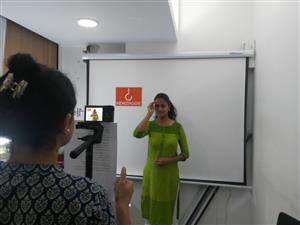
Easy access to news for persons with disabilities
Newz Hook provides easy access to news for persons with hearing and visual impairments as well as intellectual disabilities. It also informs parents and special educators on innovations. Between 2016 until 2017, Newz Hook has gained 8,000 users of the app and 20,000 users who read the news every day on the website.
BarrierBreak, Newz Hook, India -
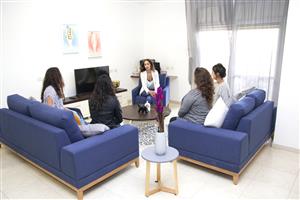
Supported Housing for Women with Psychosocial Disabilities and Sexual Trauma
Three or four women with post-traumatic stress disorder due to sexual abuse share an apartment. A female social worker and rehabilitation counselor, both trained in sexual trauma and Dialectical Behaviour Therapy (DBT), visit the apartment daily. The service offers personal meetings, group therapy, and peer support.
ENOSH - The Israeli Mental Health Association, Seeds of Wellness, Israel -
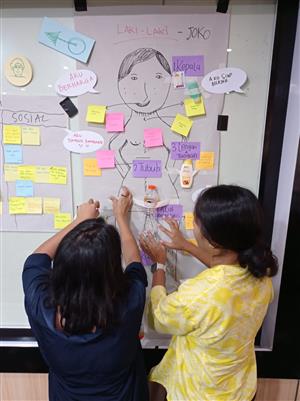
Trainings on sexual and reproductive health for youth with disabilities
BodyTalk’ is a project in Viet Nam on the topic of adolescent sexuality. Initiated by the Liliane Fund and the Rutgers organization, both from the Netherlands, it brings together young people with disabilities, their parents, teachers, communities, and health care providers.
Liliane Foundation, BodyTalk, Vietnam