Search Results
Search
Filter results
Advanced Filters
Your search returned 77 Solutions
-
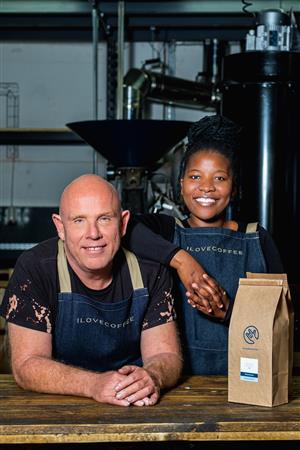
Expanding a chain of coffee shops run by Deaf young people
I Love Coffee operates a chain of coffee shops and coffee roasters and is staffed by deaf youngsters. Employees receive training and support. I Love Coffee currently has ten locations in Cape Town and Johannesburg and employs 26 people, 80 per cent of whom are deaf, and has trained a total of 100 people.
I Love Coffee, I Love Coffee, South Africa -
Supporting schools to establish assistive technology labs for blind students
inABLE supports specialized schools to teach students who are blind in assistive and digital technologies. The NGO not only equips the necessary infrastructure, but also provides instructors and the training for teachers. For the students, inABLE has designed an assistive technology computer curriculum.
inABLE, inABLE Computer Labs, Kenya -
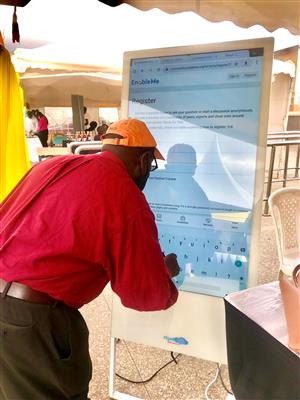
Nationwide platform for all disability-related information in a low-income country
In 2021, EnableMe Kenya launched an interactive online platform to support people with disabilities and their relatives who have no other access to relevant information. The portal provides information on more than 200 topics and had more than 70,000 visitors between 2021 and 2022.
EnableMe - Kenya, EnableMe Community platform, Kenya -
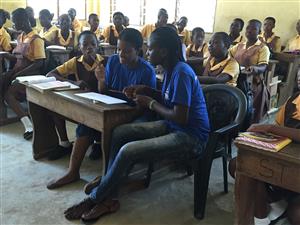
Inclusive Education
rolled out throughout Ghana
Ghana's inclusive education policy and a comprehensive implementation plan (2015 to 2019) have led to the nationwide introduction of inclusive education. The programme started in 2009, by 2011 a total of 529 schools were participating and 1,322 teachers and specialists from the Ghanaian Education Service were trained.
Ghana Education Service, Special Education Division, Inclusive Education Policy, Ghana -
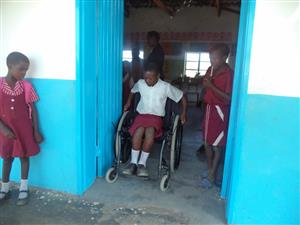
Integrating Inclusive Education in local communities in Zimbabwe
The project’s two model schools have a total enrolment of 738 children, including 85 with disabilities. 7 teachers were trained in sign language and Inclusive Education issues, as well as 14 school development committee members. Some 2,000 community members were informed on Inclusive Education through awareness campaigns.
Jairos Jiri Association, Zimbabwe -
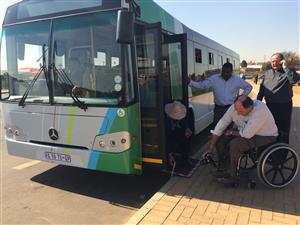
Accessible public transport strategies for 13 major municipalities
The strategy was developed to guide, support and monitor municipalities in the implementation of accessible public transport systems. It includes new Universal Design standards for the whole travel chain and covers both access to information and to the services themselves for people with different disabilities.
South African Department of Transport, South Africa – Department of Transport – The Implementation Strategy to Guide the Provision of Accessible Public Transport Systems in South Africa, South Africa -
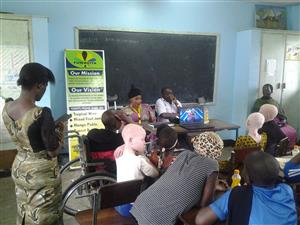
Entrepreneurship training programme for women with disabilities
FUWAVITA was founded in 2018 by Aneth Geranda Isaya, the first deaf person to graduate from university in Tanzania. Aneth teaches women with disabilities to produce handicrafts and food that they can sell. By 2020, 500 women had successfully completed the economic generation training.
FUWAVITA - Tanzania Joy Women Entrepreneurship for the Deaf, FUWAVITA, Tanzania -
A multifunctional hub towards the open labour market
The Living Link employment model includes job analysis, job matching, interview support, placement, co-worker training, and advocacy, as well as the recommendation of assistive devices and the provision of career planning. In 2015 alone, approximately 50 people were hired in various forms of employment.
Living Link, South Africa -
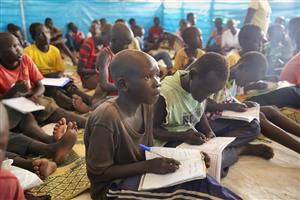
Providing Inclusive Education in camps for internally displaced persons (IDP)
The project provides training for teachers, support for children and their families, and training for relief workers to identify disabilities and make their emergency services more inclusive. Since 2019, Light for the World has been working in partnership with relief agencies and NGOs in three camps in Southern Sudan.
Light for the World Austria, IDP Programme, South Sudan -
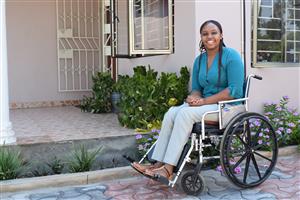
GIS-based mapping and improving of accessible water, sanitation , and hygiene (WASH) facilities
ZWASH is conducting GIS-based mapping to assess the accessibility of toilet facilities in schools and health centres in Zambia. The data will be used by World Vision and government agencies to provide accessible toilets and WASH facilities where they are most needed. ZWASH will be rolled out in more than 40 other countries.
World Vision, Zambia Water Sanitation and Hygiene (ZWASH), Zambia