Search Results
Search
Filter results:
Advanced Filters
Your search returned 94 Solutions
-
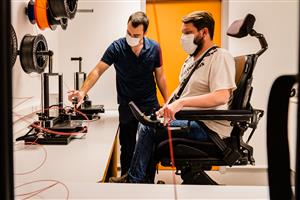
A distributed network of inclusive makerspaces for personalized assistive technology
REHAB-LAB is a network coordinated by Kerpape Rehabilitation Center in which persons with disabilities work with occupational therapists and technical facilitators to design, digitally fabricate and test personalized assistive devices. Member hubs share designs and documentation freely for local reuse.
Kerpape Rehabilitation Center, REHAB-LAB: A distributed network of inclusive makerspaces for personalized assistive technology, France -

Providing assistive technology for children in rural Asia
In 2020, Amar Seva Sangam of India launched the ‘Paediatric Assistive Technology Provision’ programme with a focus on children in rural areas, including a training programme for rehabilitators and financial support. It is expected that by the end of 2022 close to 1,000 assistive devices will be provided to users.
Amar Seva Sangam, Paediatric Assistive Technology Provision Programme, India -

IT-company funding an incubator programme for assistive technology start-ups
"BIRAC– Social Alpha Quest for Assistive Technologies – supported by Mphasis" is an incubator programme for start-ups in India working on assistive technologies and innovative solutions for people with disabilities. In 2019, 14 start-ups were selected to receive free incubation support, direct funding, and mentoring.
Mphasis F1 Foundation, BIRAC-Social Alpha Quest for Assistive Technologies – supported by Mphasis, India -
Supporting schools to establish assistive technology labs for blind students
inABLE supports specialized schools to teach students who are blind in assistive and digital technologies. The NGO not only equips the necessary infrastructure, but also provides instructors and the training for teachers. For the students, inABLE has designed an assistive technology computer curriculum.
inABLE, inABLE Computer Labs, Kenya -

Learn, try, and test assistive technology
"Tech Able" lets visitors experience assistive technologies and encourages innovators, manufacturers, and marketers to collaborate. Tech Able also houses a communications lab for persons with disabilities. More than 800 people have benefitted from Tech Able between 2015 and 2018.
SG Enable, "Tech Able“ Showroom, Singapore -
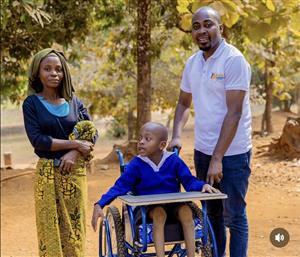
Quality assistive devices locally produced and delivered in East Africa
Kyaro Assistive Tech makes affordable, customizable assistive devices in East Africa and delivers WHO‑standard services. By 2025 it offered 26 device types; deliveries rose from 52 (2021) to 663 (2024). Over 40 professionals were trained. Funding mixes sales, grants and donations; a new factory is planned for 2026.
Kyaro Assistive Tech, Kyaro Assistive Tech, Tanzania -
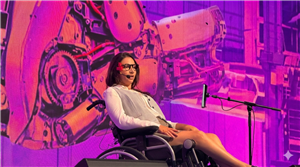
Subscriptions and device loans bring assistive technology to more users
Colibri Interfaces offers three assistive technologies: AAC software, a wearable head mouse and a speech-generating tablet. Subscriptions, one-off sales, free options, device loans and remote support serve people with communication, learning and motor disabilities.
Colibri Interfaces, Colibri Assistive Technology Ecosystem, Brazil -
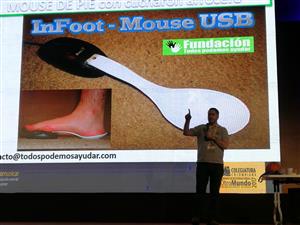
Open-source creation and exchange of assistive devices and educational videos
Real Problems, Real Solutions (Todos Podemos Ayudar) creates and shares open-source, low-cost assistive devices and educational videos. They provide DIY tutorials, affordable products, workshops and consulting, reaching thousands online and in person.
Todos Podemos Ayudar, Real Problems, Real Solutions, Colombia -
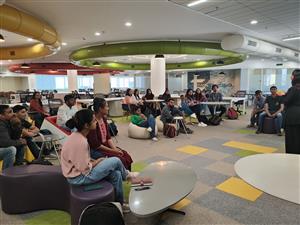
Pre-incubator supporting social innovation and entrepreneurship in assistive technology
Digital Impact Square (DISQ) by Tata Consultancy Services Foundation, India: Incubation programme for Assistive Technology start-ups. By 2023, supported eight start-ups, improving the lives of over 100,000 persons with disabilities and their caregivers.
Tata Consultancy Services, Digital Impact Square (DISQ), India -

Online training for parents and teachers of children with learning disabilities
Accessing UrAbility, users are first guided through a selection tool to choose the best fitting Assistive Technology. They are then auto-assigned courses based on their technical abilities, language, and location. The courses contain video demonstrations, live Q&A sessions, and access to a closed meet-up group
UrAbility, Assistive Technology to Support Children with Learning Disabilities, Ireland