Government, universities, and communities expanding access to sign language online
- Solution
- WikiLibras
- Organization
- Secretariat of Digital Government of Brazil’s Ministry of Management and Innovation in Public Services (SGD/MGI) and the Federal University of Paraíba (UFPB)
- Country of Implementation
- Brazil
- Region
- Latin America & Caribbean
- Subregion
- South America
- City
- João Pessoa, Paraíba, Brazil
- Start Year
- 2016
Solution details
“Community participation keeps sign language technologies accurate, relevant, and inclusive.” Tiago Maritan, WikiLibras Coordinator, Universidade Federal da Paraíba
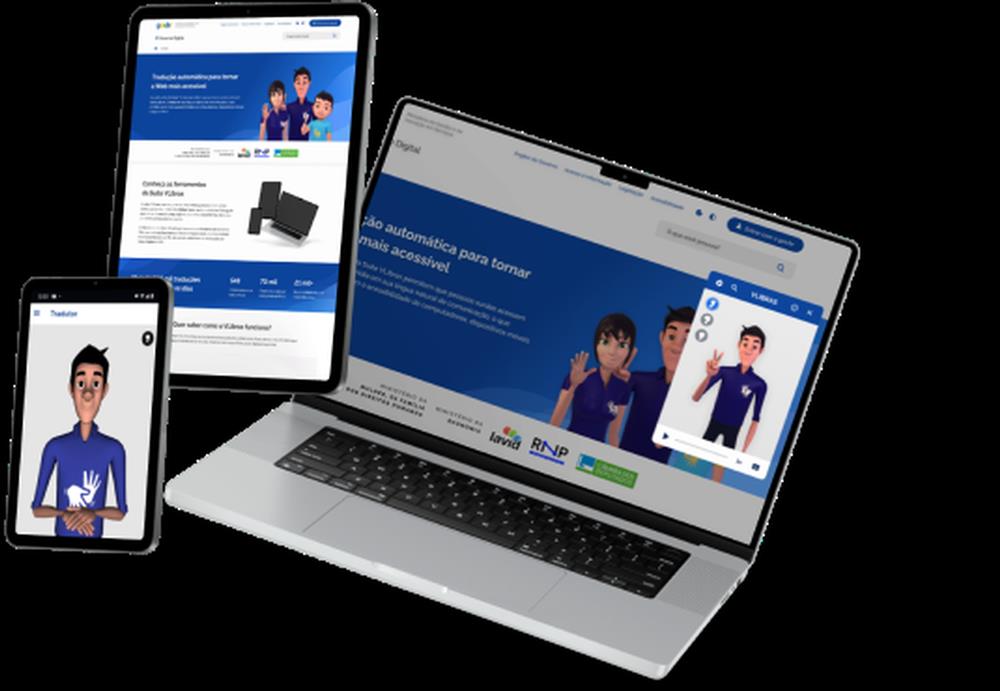
Universidade Federal da Paraíba (UFPB) is a public university in Brazil. Together with the Secretariat of Digital Government, it developed WikiLibras, building on VLibras, a platform launched in 2016 that translates digital content into Brazilian Sign Language. WikiLibras enables contributors to submit signs, examples, and animations for integration into VLibras. By mid-2026, WikiLibras had 1,360 contributors and 23,000 signs, while VLibras was available on 120,000 websites.
Problems Targeted
Without enough validated signs and translation examples, technologies translating digital content into Brazilian Sign Language cannot expand their vocabulary or improve translation quality.
Solution, Innovation and Impact
The Digital Video Applications Laboratory (LAVID) at UFPB developed WikiLibras jointly with Brazil’s Secretariat of Digital Government in at the Ministry of Management and Innovation (SGD/MGI). Unlike traditional sign language dictionaries, which are typically curated by small expert teams and updated infrequently, WikiLibras enables the collaborative creation and validation of Brazilian Sign Language resources through a structured governance model that combines open community participation with expert review. WikiLibras builds on VLibras, a free tool that automatically translates digital content from Portuguese into Brazilian Sign Language, which was also developed by UFPB. Contributors submit signs, translation examples, and animations. Accredited Deaf specialists, linguists, and interpreters review and validate them before they enter the VLibras knowledge base. Most reviewing Libras specialists are Deaf persons, which combines community contributions with expert validation. VLibras is available on over 120,000 websites and delivers around 3 million automatic translations monthly. In July 2026, VLibras integrated 12,786 Portuguese–Libras gloss sentence pairs contributed through WikiLibras. Tests using 500 sentences showed improvements in translation quality compared with the previous version.
Funding, Outlook and Transferability
WikiLibras is free and open source, funded through a long-term public research and development partnership. SGD/MGI provides public-sector coordination and funding, while UFPB’s LAVID leads research, technical development, and community contributions. The Ministry of Human Rights and Citizenship also partners on VLibras. (Zero Project Awardee 2027).
Media
Pictures
Related information
- Connections
- 2
-
Organization
- People
