A replicate model of personal assistance recognized by the government
- Solution
- Independent Living Programme
- Organization
- Asociación Luchando Contra Viento y Marea
- Country of Implementation
- Peru
- Region
- Latin America & Caribbean
- Subregion
- South America
- City
- Lima & Amazonas
- In cooperation with
- This project began after an international internship in Japan through JICA. For about two years, we received support from the Mainstream Independent Living Center. Since then, we have advanced it in Peru with public institutions and DPOs.
- Start Year
- 2017
Solution details
“Autonomy is achievable when adequate, sustained, and person-centred supports are in place.” Bárbara Ventura, founder and president of lCVM
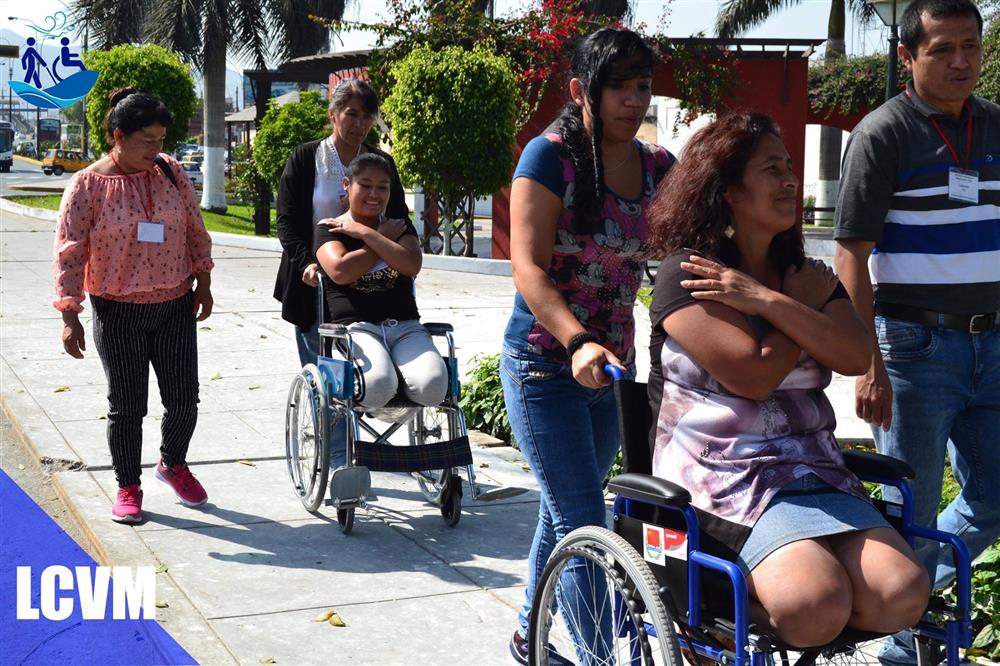
Asociación Luchando Contra Viento y Marea (LCVM, “Fighting Against All Odds”) is a Peruvian DPO founded in 2012, working in Lima and Amazonas. Its Independent Living Programme, launched in 2017, supports persons with various disabilities to live autonomously in their communities through the training of personal assistants and families, individual support plans, and institutional advocacy. By mid-2026 it had reached 374 persons with disabilities and 300 families. Since April 2026 the programme is officially recognized as part of public policy, strengthening its role as a national technical benchmark.
Problems Targeted
Many persons with disabilities in Peru lack funded personal assistance; while families, institutions, and potential assistants have limited understanding of personal assistance and independent living.
Solution, Innovation and Impact
In 2017, LCVM launched its Independent Living Programme, based on four pillars: training personal assistants; training persons with disabilities and their families through online learning, practical workshops, and supervised field practice; individual support plans covering their goals and assistance needs; and institutional advocacy. The hybrid model proved to work well in urban and rural areas, as many persons with disabilities and personal assistants had mobile phones and connectivity. An intercultural approach supported migrant participants and those from diverse backgrounds. By mid-2026 over 300 Individual Support Plans were developed jointly with persons with disabilities and their support networks. Accessible manuals include easy-to-read and dyslexia-adapted versions, while local facilitators and a hybrid format support delivery in urban and rural areas. Personal assistants, who work with families and persons with disabilities, receive $10 per hour. Currently, this is being provided and funded by a partner organization, called Reaprende. To recruit new personal assistants LCVM works with community calls, also in rural areas, always with partners from regional offices that assist people with disabilities.
Funding, Outlook and Transferability
As of 2026, LCVM operates without external funding. Training fees and contributions from personal assistants on its staff have generated additional income. The model has already expanded from Lima to Amazonas through local partnerships. In 2026, LCVM planned to begin training with two partners and is preparing replication in two or three other countries. (Zero Project Awardee 2027).
Media
Pictures
Related information
- Connections
- 2
-
Organization
- People
