Government platform for inclusive disaster planning using simulations and demographics
- Solution
- Inclusive Evacuation and Shelter Assessment System
- Organization
- National Science and Technology for Disaster Reduction
- Country of Implementation
- Taiwan
- Region
- Asia & Pacific
- Subregion
- Southeast Asia
- Start Year
- 2020
- First published
- 03.12.2025
Solution details
“Preparedness begins with knowing the needs of every community member.” Hsiang-Chieh Lee, Division Head, NCDR
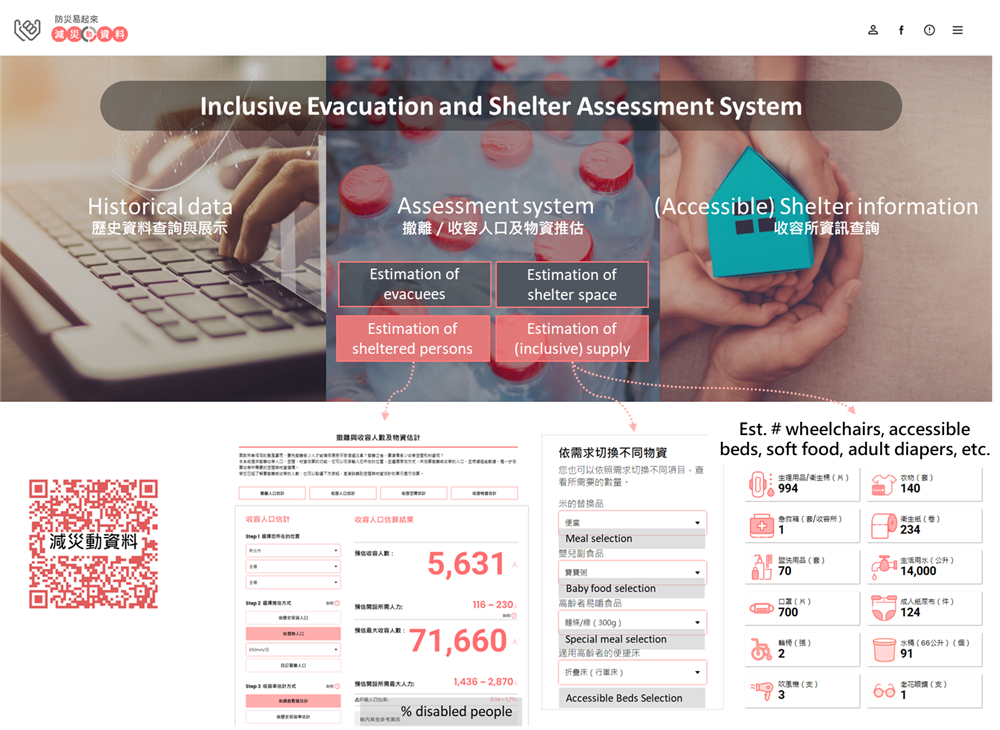
Taiwan’s National Science and Technology Centre for Disaster Reduction (NCDR), an agency of the public sector, provides data-driven tools for disaster preparedness. Its Inclusive Evacuation and Shelter Assessment System is a data-driven digital platform incorporating scientific models, typhoon data, and demographics. Implemented in all 22 cities and counties, it enables 7,700 villages to pursue proactive, human-centric disaster planning. By mid-2025 the system has been used over 27,000 times.
Problems Targeted
Local governments lack tools for proactive, accessible disaster planning and resource allocation for persons with disabilities.
Solution, Innovation and Impact
The Inclusive Evacuation and Shelter Assessment System is a digital tool that integrates hazard simulation, historical typhoon data, demographic vulnerability, and user intent to support inclusive disaster planning in Taiwan. By utilizing scientific simulation and real records, it estimates potential evacuees according to local population structures and specific needs – such as accessible toilets, adaptive beds, and inclusive food options. The system consolidates 10 national datasets, including meteorological, census, and social care data, to enable evidence-based resource allocation. The platform features guided scenario selections via user-friendly drop-down menus, allowing local authorities to choose between planning based on historical disaster experience or predictive modelling. A train-the-trainer approach and open access ensure widespread usability and dissemination, with partnerships from NGOs, universities, and disability organizations contributing to system updates, outreach, and feedback. Through government policy, it links all 22 city and county governments and 7,700 villages in Taiwan, with design and annual updates managed by the NCDR within its annual budget. From 2020 to mid-2025, the system has been used in more than 27,000 planning instances, informing hundreds of disaster management strategies, shaping regional policy guides, and providing blueprints for proactive flood and climate emergency planning.
Funding, Outlook and Transferability
The Inclusive Evacuation and Shelter Assessment System is fully funded by public government budgets. (#ZeroCall26)
Media
Related information
- Connections
- 1
-
Organization