A replicable model for accessible programmes in libraries and other public spaces
- Solution
- Accessible Programmes
- Organization
- National Library Board, Singapore
- Country of Implementation
- Singapore
- Region
- Asia & Pacific
- Subregion
- Southeast Asia
- Start Year
- 2023
- First published
- 03.12.2025
Solution details
“An accessible library empowers every person to learn, experience, and connect.” Kavita Ilangovan, National Library Board, Singapore
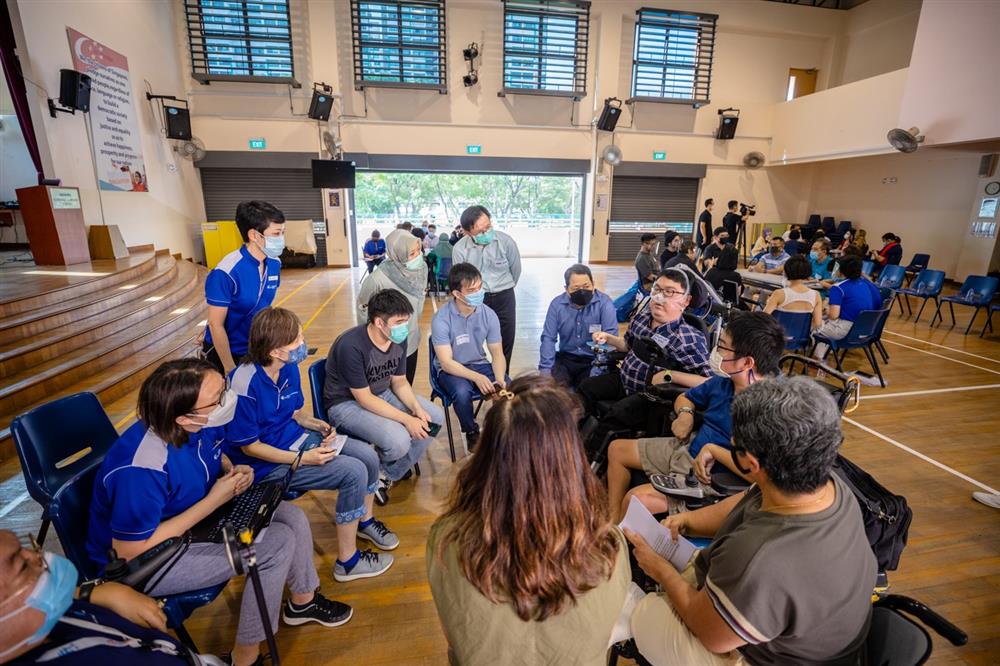
The National Library Board of Singapore (NLB) is a large public entity. In one of its sites, the Punggol Regional Library, a leader in accessibility and inclusion, it has launched the Accessible Programmes project, which proactively involve persons with disabilities as both participants and leaders in workshops and events. All materials and resources are provided free and open source, bringing the whole library infrastructure and services to life. The number of Accessible Programmes offered is continuously expanding, from 11 in 2023 to 23 in 2024.
Problems Targeted
Lack of inclusive, truly participatory public spaces and of accessible programmes prevents persons with disabilities from learning, leading, and generating their own income.
Solution, Innovation and Impact
The Punggol Regional Library, a leader in accessible and inclusive libraries (and featured in the Zero Project Champions Report on “Inclusive Spaces”) developed the Accessible Programmes project, which enables persons with disabilities not only to attend but also design and lead library activities, such as storytelling, calligraphy, and photography. For example, a series of programmes was designed to support the independence and creative expression of persons with vision impairments. In one session, participants were guided on how to use the voiceover function on their smartphones to navigate camera settings and manage their photo libraries. Another session focused on tactile art, encouraging self-expression through touch, texture, and alternative approaches to visual creativity. Accessible Programmes are supported through various tools, such as sign language interpretation, live captioning, tactile materials, or accessible spatial layouts (e.g., ceiling power cables, clutter-free rooms). They can be adapted in many ways to the needs of its users, such as using performance spaces with ample room for wheelchairs, and the use of visual schedules and social stories for persons on the autism spectrum. Launched in 2023, the participation of persons with disabilities rising from 118 to 5,557. The pilot project in Punggol will be expanded to four regional libraries and 20 branch libraries by 2030 and supported by staff training.
Funding, Outlook and Transferability
The NLB pays honorariums for Accessible Programmes led by people with disabilities; and at user-led exhibitions, artists and craftspeople can sell their works directly via the library’s QR code payment systems. All documentation and accessibility infrastructure are open source and ready to be adapted by other libraries and public venues internationally. (#ZeroCall26)
Media
Related information
- Connections
- 1
-
Organization