Transforming performing arts through leadership of artists with disabilities
- Solution
- Europe Beyond Access
- Organization
- Skånes Dansteater
- Country of Implementation
- Sweden
- Region
- Europe
- Subregion
- Northern Europe
- Start Year
- 2018
- First published
- 03.12.2025
Solution details
“Across Europe artists with disabilities are enriching the cultural sector.” Ben Evans, Project Director, Europe Beyond Access
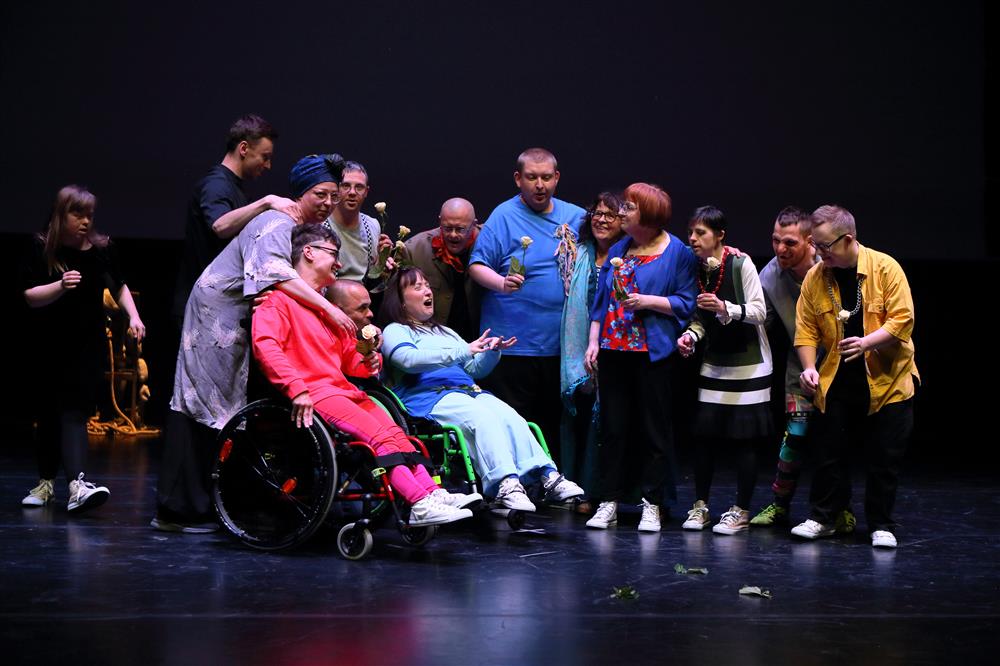
Europe Beyond Access, led by Skånes Dansteater and co-funded by Creative Europe, unites 11 leading arts institutions to support Deaf and disabled artists through commissions, co-production, tours, and artistic exchanges. The project challenges barriers in dance and theatre, driving change across the wider European cultural sector. In 2024 it delivered 24 touring events, 3 commissions, and 14 sector events; achieved change within its institutional partners; and impacted EU policy.
Problems Targeted
Artists with disabilities face persistent barriers to leadership, production opportunities, and recognition in mainstream European performing arts.
Solution, Innovation and Impact
Europe Beyond Access (EBA) elevates Deaf artists from participants to curators, leaders, and board members, ensuring direct involvement in artistic direction, programming, and governance. The partnership includes sector-leading organizations such as CODA, Kampnagel, Project Arts Centre, Mercat de les Flors, Culturgest, OrienteOccidente, Onassis Stegi, Théâtre National de Bretagne, Zamek Cultural Centre, and the British Council. Using open calls, EBA supports a wide range of disabled artists across Europe to present work on their own terms. All co-productions are led by artists with disabilities, partners involve disabled curators in programme development, and a board of 10 disabled artists guides decisions. EBA’s dual approach combines artistic creation with sector-wide advocacy to dismantle structural barriers and drive systemic change. Partners commit to lasting reforms in recruitment, accessibility, and board representation. The model has been replicated in 10+ countries, increasing artist employment, creating new accessible formats, and gaining recognition from the EU and international arts bodies. Skånes Dansteater adapted the model in Sweden through the Viaductues project; after shifting to digital in 2020, captioning, sign language, alternative formats, and remote participation became standard in all activities. EBA also shapes transnational debates, for example through Skånes Dansteater’s “Inclusive Processes Within Performing Arts” conference and a 2024 Assitej presentation in Torino by Anna Consolati and Filip Pawlak on disabled artists in youth theatre.
Funding, Outlook and Transferability
Europe Beyond Access has a total budget of €4 million and is co-funded by the EU via its Creative Europe-funding programme (50 percent) and resources of the partnering institutions. The funding period of Creative Europe has been extended until 2027. (#ZeroCall26)
Media
Related information
- Connections
- 1
-
Organization