Co-designed accessible disaster database for households with disabilities in rural areas
- Solution
- Disability-Inclusive Disaster Data Initiative (DIDDI)
- Organization
- Hanoi Association of People with Disabilities (DP Hanoi)
- Country of Implementation
- Vietnam
- Region
- Asia & Pacific
- Subregion
- Southeast Asia
- Start Year
- 2024
- First published
- 03.12.2025
Solution details
“Databases built by persons with disabilities strengthen community resilience.” Ms. Duong Hang Nga, Project Officer
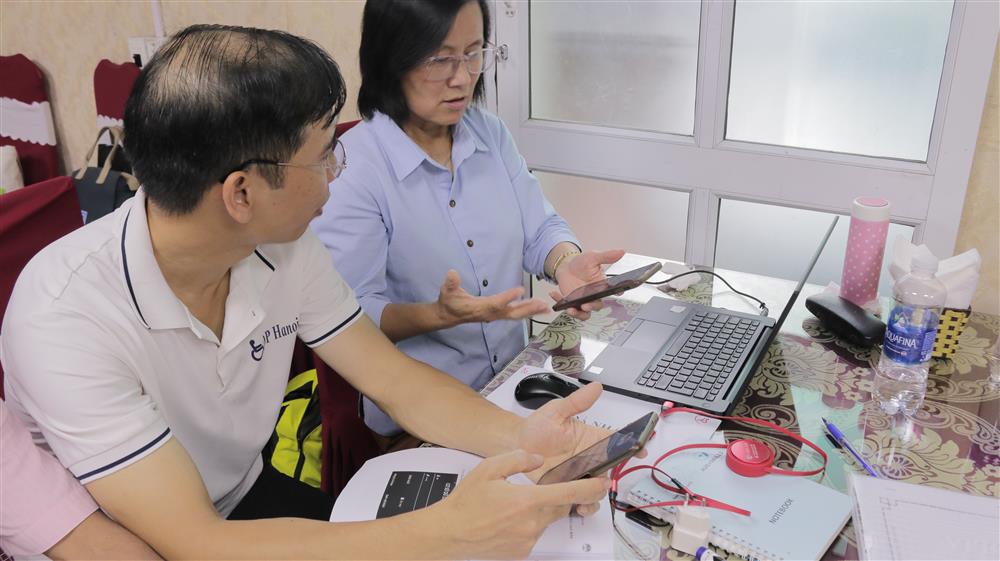
In 2024 the Hanoi Association of People with Disabilities (DP Hanoi) launched an initiative called DIDDI as a pilot-project for the rural My Duc district. DIDDI developed a spatial database mapping households where persons with disabilities live as well as their infrastructure, collecting hundreds of data points and training government officials. The data was then integrated into the Viet Nam Disaster Monitoring System, aiding over 2,500 beneficiaries who can be efficiently supported in an emergency.
Problems Targeted
People with disabilities are exposed to increased disaster risk and poor evacuation planning due to a lack of accurate data.
Solution, Innovation and Impact
The Collecting Data on Households with Disabilities and Accessible Disaster Prevention Infrastructure project established a digital, accessible spatial database recording GPS and demographic data, disability types, and the accessibility features of public facilities such as People’s Committees, cultural centers, schools, and health stations. This information is gathered by a team of people trained in GPS data collection and inclusive disaster risk management, including persons with disabilities. The collected data is then cleaned and verified before being uploaded to Viet Nam’s Disaster Monitoring System (VNDMS), where it is made available in real time to communes, OPDs, and official disaster response teams. Additionally, the system assists DP Hanoi in managing membership data more effectively and advocating for disability-inclusive disaster risk reduction. The DP Hanoi initiative was piloted in the rural district of My Duc in 2024, where no data on households with disabilities had previously been available. Twenty-three trainees collected 594 data points (536 households and 58 facilities), reaching 545 direct beneficiaries and 800 indirect ones. By late 2024, the upgraded database had been integrated with VNDMS to support over 2,500 disabled people from 2025 onwards, with plans to expand to other districts.
Funding, Outlook and Transferability
The project was funded with a $14,000 philanthropic grant from the Embassy of Switzerland in Viet Nam. Local OPDs and authorities provided in-kind contributions such as staff time, venues, and coordination. Viet Nam’s shift to a two-tier administrative system, which dissolved district-level organizations and merged commune units, requires reorganization from groups such as DP Hanoi to match the new framework. This transition interrupted data updates and the management systems. (#ZeroCall26)
Media
Related information
- Connections
- 1
-
Organization