Adaptive AI-powered technology to optimize visual experience for people with low vision
- Solution
- ReBokeh
- Organization
- ReBokeh Vision Technologies
- Country of Implementation
- United States of America
- Region
- North America
- Start Year
- 2022
- First published
- 03.12.2025
Solution details
“Our vision is for everyone to access the world in the way that works best for them.” Rebecca Rosenberg, Founder and CEO, ReBokeh Vision Technologies
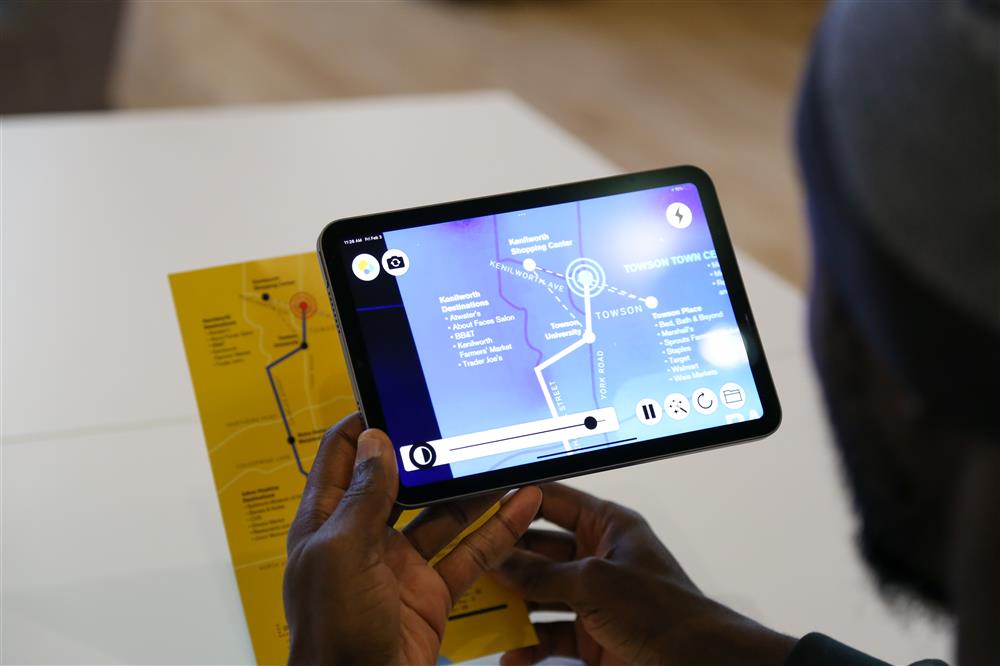
ReBokeh Vision Technologies, an assistive technology-producing company headquartered in Towson, Maryland, has developed the ReBokeh app, supporting persons with low vision in optimizing their visual experiences. The app works like a real-time photo editor, letting users adjust contrast, lighting, zoom, and colour to fit their needs. Launched in 2022, by mid-2025 ReBokeh was in use in 115+ countries, partnering with museums, airports, zoos, and more, and has grown to over 280,000 usages by 2025.
Problems Targeted
Most low vision tech replaces vision rather than making use of it. Millions lack affordable, practical solutions for functional sight in daily life.
Solution, Innovation and Impact
ReBokeh delivers smartphone-based technology that lets users adjust visual filters for the feed of their smartphone camera, personalizing contrast, lighting, and clarity to their visual preferences and situation. ReBokeh claims that it can support 90 per cent of those persons with visual impairment who retain some sight. ReBokeh AI supplements this with scene analysis, extended descriptions, and translation, all at a low cost and without requiring new hardware. The software is intuitive and can run offline. Its educational version, ReBokeh EDU, includes privacy features and recording tools tailored to classroom use, expanding accessibility in learning environments. In addition to the founder being a person with low vision herself, ReBokeh’s technology was developed with consistent feedback from more than 150 beta testers from all across the low vision care pathway. ReBokeh also has the See-Suite Beta programme, where low-vision users of ReBokeh continue to provide feedback on new versions of the technology. In the U.S., ReBokeh has partnered with over a dozen venues, offering free full access to users on-site through its All-Access programme. Launched in 2022, ReBokeh grew to over 117,000 usages in 2024 and more than 280,000 by mid-2025 in 115+ countries.
Funding, Outlook and Transferability
ReBokeh follows primarily a B2B SaaS business model, where it is free of charge for individual users when organizations such as airports, museums, or zoos sponsor the availability of ReBokeh in their space. Upon entering the space, users then have the full version of ReBokeh unlocked on their personal device using GPS location. The open, cloud-enabled, and AI-driven model enables fast geographic and sector scaling, with new versions planned for broader underserved communities and global education partnerships. (#ZeroCall26)
Media
Related information
- Connections
- 1
-
Organization