Translating eye movements into music and integrating robotic arms to play instruments
- Solution
- EyeHarp
- Organization
- Fundacion SIFU
- Country of Implementation
- Spain
- Region
- Europe
- Subregion
- Western Europe
- Start Year
- 2010
- First published
- 03.12.2025
Solution details
“ I never imagined I could play music with my eyes.” Joel Bueno, EyeHarp Ambassador, Fundación SIFU
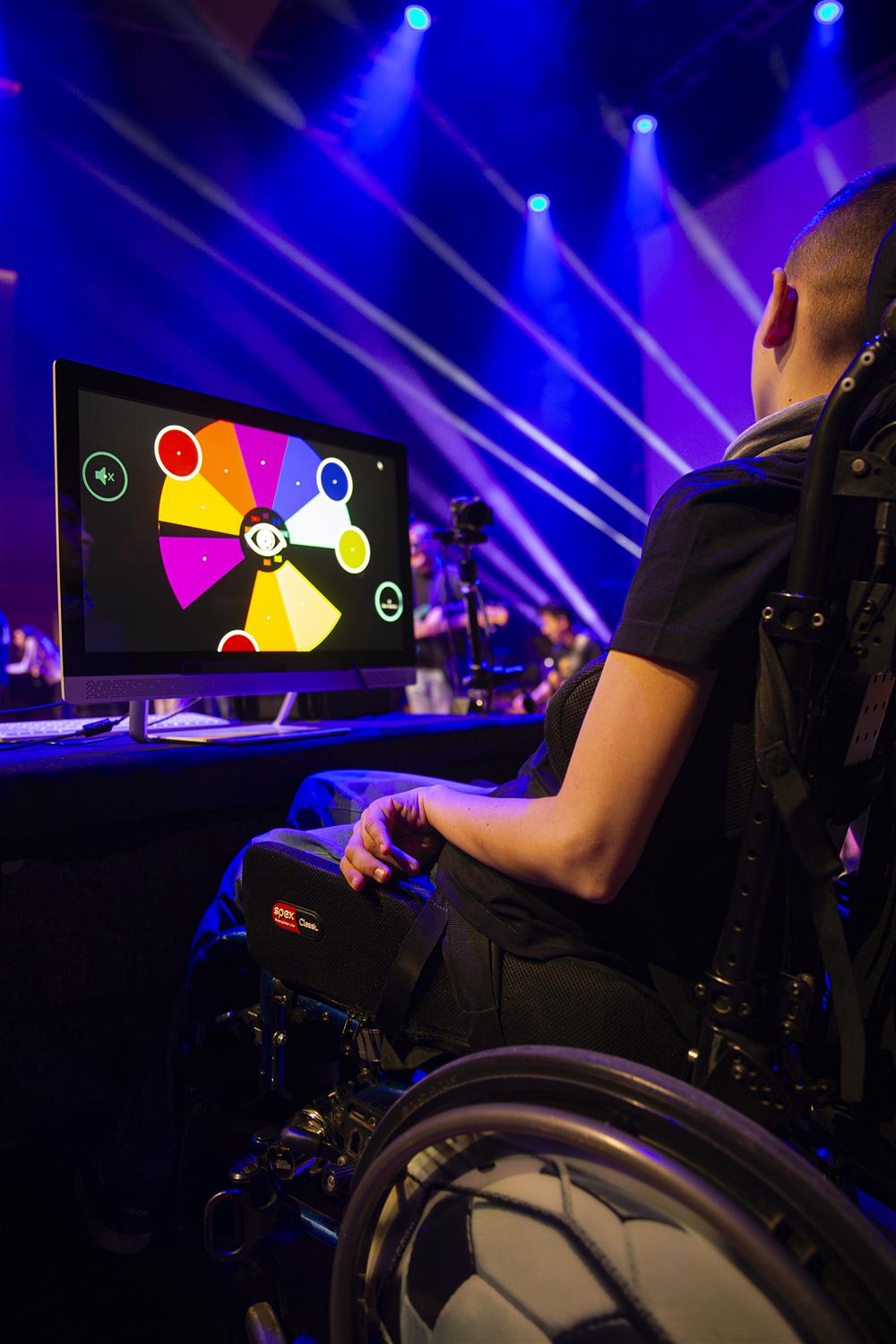
Fundación SIFU, a leading Spanish NGO for social and labour inclusion, partnered with EyeHarp Association to deliver a digital music tool enabling people with severe disabilities such as cerebral palsy or ALS to play music using only eye or head movements. The project trains therapists, offers affordable lifetime licenses, and continues to scale internationally. Recent advances integrate robotic arms to control real instruments.
Problems Targeted
Severe physical disabilities prevent participation in music education and performance, causing exclusion from creative and social activities.
Solution, Innovation and Impact
EyeHarp is a digital instrument using eye- and head-tracking, enabling music creation for people with minimal motor function. Personalized setups adapt to switch, head, or gaze input, making it highly versatile for severe disabilities. Users can control notes, pitch, and perform complex pieces with gaze alone. The latest breakthrough links EyeHarp output to robotics, allowing users to play actual instruments, such as the piano, forging a direct connection between digital and physical music-making. The technology is applied both in individual therapy and inclusive group settings. By training educators, therapists, and peer musicians in its pedagogical approach, EyeHarp is embedded within community music schools, special education, and rehabilitation centres. Lifetime licenses and professional support ensure affordability, while a train-the-trainer model (involving users with disabilities as instructors) extends reach. EyeHarp grew from 192 users in 2021 to 485 in 2024, and more than 40 schools in Greece and other care institutions worldwide now use the programme to foster inclusive musical participation. By 2025, EyeHarp was implemented in Greece and Spain, with pilots in Germany, Netherlands, Sweden, United Kingdom, and United States. A training programme designed for 1–15 therapists aims to reach 200 users by 2026, with long-term plans for 2,000 users in Spain.
Funding, Outlook and Transferability
The project is sustained through institutional licensing, partnerships with public disability agencies, and grants. The business model includes device-neutral software, training, and support, allowing rapid, cost-effective scaling. Ongoing expansion targets national and international care and education providers eager to integrate innovative music programmes for persons with severe disabilities. (#ZeroCall26)
Media
Related information
- Connections
- 1
-
Organization