Accessible micro-learning platform transforming training of frontline workers
- Solution
- Musa
- Organization
- Edge Tec SAC
- Country of Implementation
- Peru
- Region
- Latin America & Caribbean
- Subregion
- South America
- Start Year
- 2021
- First published
- 03.12.2025
Solution details
“We bring learning to everyone’s hands — no downloads, no barriers, just opportunities.” Monica Ramos Li, COO and Founder, Musa
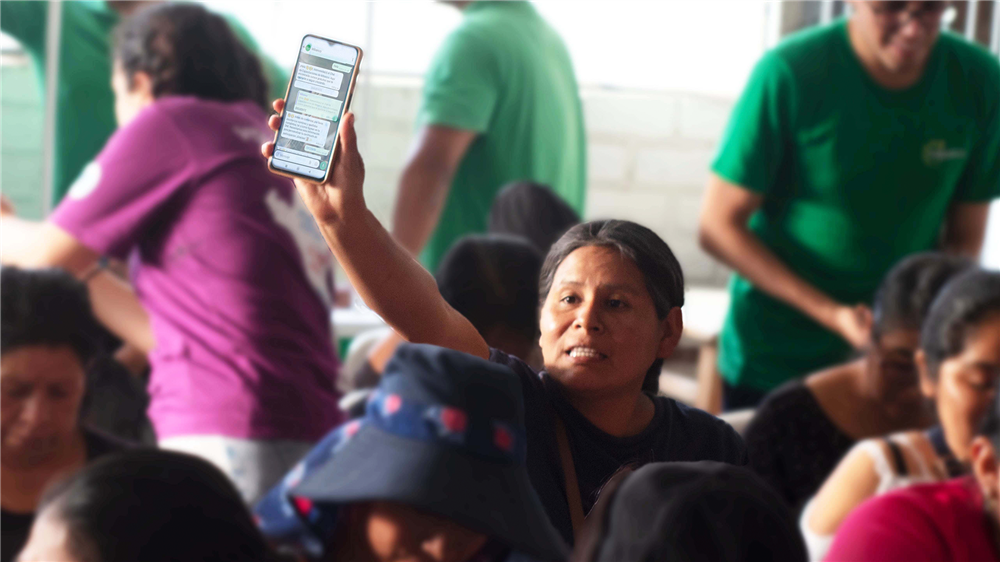
Edge Tec SAC, a Peruvian EdTech company, developed Musa, an AI-powered micro-learning platform delivering accessible training via WhatsApp to frontline workers, especially those with intellectual or hearing disabilities in low-income sectors. Musa uses plain language, visuals, and quizzes for high engagement and over 90 percent completion rates. Musa has been offered as a service to employers in the mining, retail, and agriculture industry, and reached 500,000 learners across Latin America between 2021 and 2025, with plans for further expansion.
Problems Targeted
Frontline workers (those directly exposed to public or essential operations, often with limited protection or resources) with intellectual or hearing disabilities are excluded from workplace upskilling programmes due to inaccessible, complex digital training tools.
Solution, Innovation and Impact
Musa uses a WhatsApp-based chatbot to deliver structured micro-learning without apps or logins, working even on older smartphones. Its accessibility-by-design approach includes plain language following Easy-to-Read guidelines. Musa’s platform is compatible with WhatsApp accessibility tools (screen readers, text magnification), supporting users with visual or physical disabilities. Short, self-paced modules and empathetic tone make learning accessible to users with psychosocial or cognitive disabilities. For hearing impairments, content is text- and image-based, with no reliance on audio. Real-time dashboards let employers monitor engagement, ensuring learning is consistently of high quality. Musa is widely adopted in the mining, agriculture, retail, and financial sectors, increasing training access in rural and underserved areas. Introduced in 2021, Musa has reached over 450,000 learners across Peru, Chile, and Mexico, achieving a completion rate of 90 per cent.
Funding, Outlook and Transferability
Musa is funded through a Business-to-Business model, meaning that companies, NGOs, and institutions purchase Musa’s training programmes to upskill their employees, suppliers, or community members. These organizations pay a service fee for customized WhatsApp-based micro-learning courses, which Musa designs, delivers, and monitors. Pricing ranges from $0.70 to $6 per learner per month, depending on programme duration, scale, and customization. Since 2021, Musa has achieved sales of over $200,000 and has been recognized by MIT Solve, the World Economic Forum, and Expo City Dubai for its scalable impact. By 2030, Musa aims to expand into five new countries in Latin America and Africa, reaching over 2 million learners. (#ZeroCall26)
Media
Related information
- Connections
- 1
-
Organization