Sign language-based learning tools built for children in underserved African countries
- Solution
- Kalimani App
- Organization
- The Jenga Hub
- Country of Implementation
- Tanzania
- Region
- Africa
- Subregion
- Subsaharan Africa
- Start Year
- 2022
- First published
- 03.12.2025
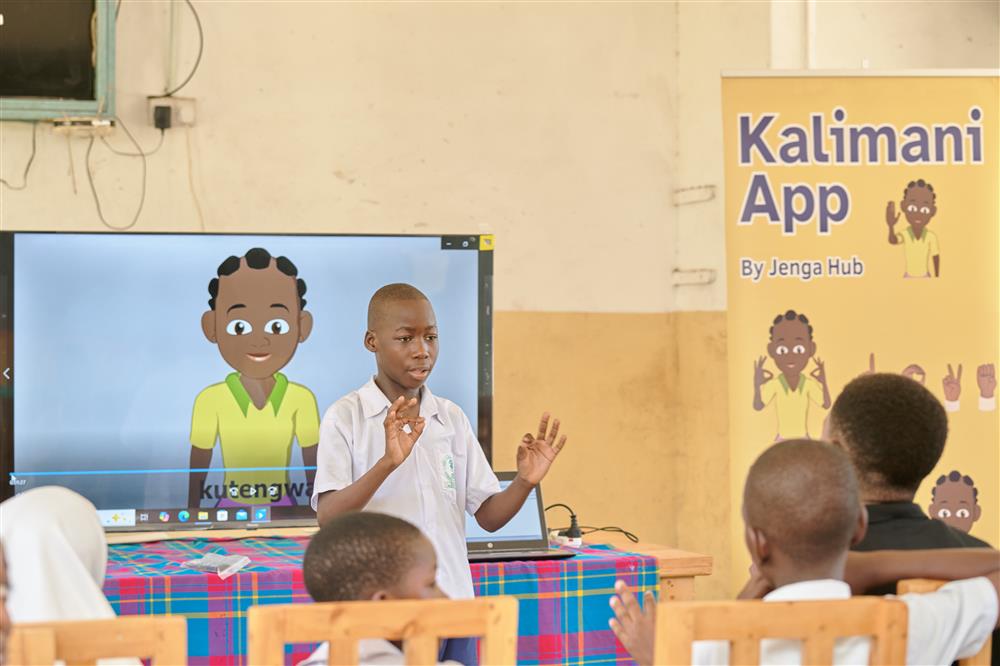
Solution details
“Kalimani shares tools to learn, the confidence to lead, and language to belong.” Nancy Sumari, Executive Director, Jenga Hub
Jenga Hub is part the Neghesti Sumari Foundation, an NGO dedicated to advancing inclusive education, based in Dar Es Salaam. In 2022 Jenga Hub launched the Kalimani App, an AI-powered digital learning platform promoting literacy, numeracy, and digital skills, teaching everything in Tanzanian Sign Language, to be used both in mainstream and specialized schools in six regions in Tanzania. By 2025 the app, which can also be used offline and is aligned with the national education curricula, had reached 3,000 learners and supported 150 teachers.
Problems Targeted
In Tanzania children who are Deaf and their teachers lack inclusive digital learning platforms and access to sign language-based curriculum materials.
Solution, Innovation and Impact
The Kalimani App is an AI-powered digital learning tool that delivers foundational literacy, numeracy, and digital skills in Tanzanian Sign Language. Designed for both mainstream and specialised schools, the app offers animated sign language videos, interactive exercises, and AI-driven voice-to-sign conversion. It also provides offline access, making it suited to rural, low-resource environments. Developed by Jenga Hub in partnership with the Tanzania Institute of Education and the Tanzania Association of the Deaf, it aligns with the national school curriculum and includes toolkits for teachers and parents. Feedback from educators and parents shows that learners using Kalimani demonstrate increased engagement, improved comprehension, and growing digital confidence. The application has been credited with helping children who previously could not read to begin to sign, read, and engage with core subjects. From its launch in 2022 to June 2025, the Kalimani Application has reached over 5,600 learners and trained more than 150 teachers in six regions to use the application in classrooms and after-school clubs. Kalimani is currently being adapted for regional use in East Africa, incorporating Kenyan Sign Language and Ugandan Sign Language for localized deployment.
Funding, Outlook and Transferability
As of June 2025, the Jenga Hub is funded by Segal Family Foundation, Dovetail Impact Foundation, and institutional partners, with in-kind support from the Ministry of Education. A freemium model will launch in 2026, offering free access to core literacy, numeracy, and safety modules; and premium tiers ($1.50 per month individuals, $3 per month educators, $100 per year institutions) will support new content, teacher dashboards, and offline kits. Cooperation with Vodacom Tanzania and Airtel Tanzania are planned as well. (#ZeroCall26)
Media
Related information
- Connections
- 1
-
Organization