Decentralized hearing care for rural areas using a tele-audiology model
- Solution
- Tele-Audiology Project
- Organization
- Oir para Crecer
- Country of Implementation
- Peru
- Region
- Latin America & Caribbean
- Subregion
- South America
- Start Year
- 2020
- First published
- 03.12.2025
Solution details
“Before, no one came this far. Now we hear, and we are heard.” Parent from Cajamarca
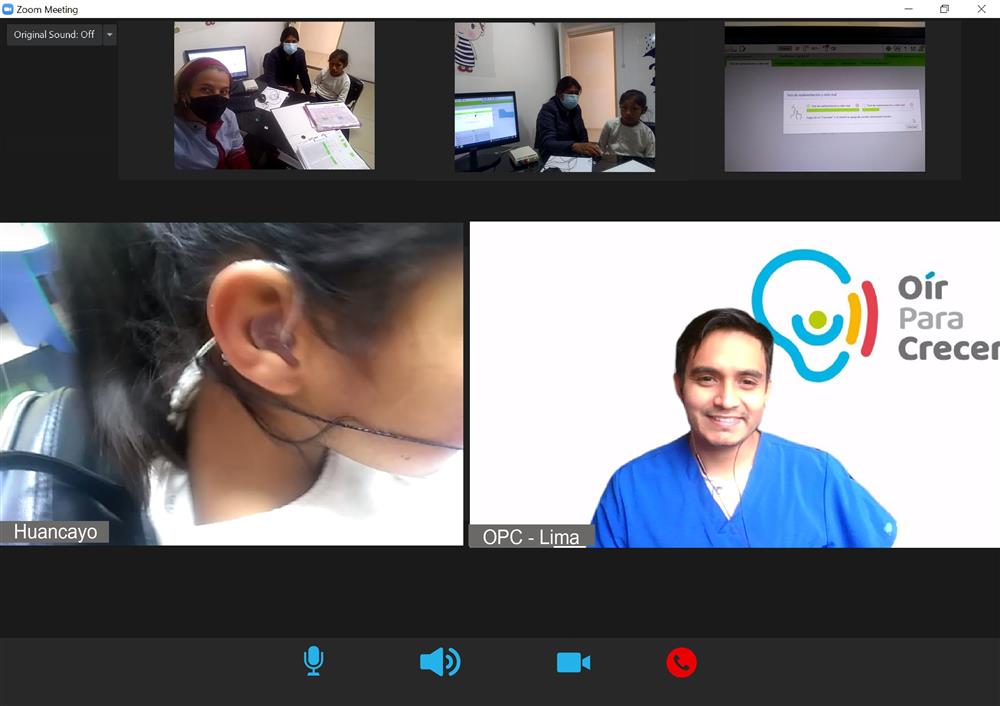
Based in Lima, Oir para Crecer is an NGO dedicated to promoting hearing health in children and adults. With its tele-audiology project, it delivers affordable hearing care to underserved regions by using high-quality Bluetooth-enabled hearing aids and local partnerships. The project provides hearing screening, device fitting, remote calibration, and user training. By 2024 over 95,000 screenings and 2,500 hearing aids were delivered, establishing a scalable model for community-rooted, accessible audiological care.
Problems Targeted
High costs, lack of trained professionals, and travel distance prevent children and adults in rural Peru from accessing hearing diagnostics and hearing aids.
Solution, Innovation and Impact
Using tele-audiology services (video calls, apps, or online services for health of the ear), Oir para Crecer creates access to quality devices and at the same time quality hearing care in rural Peru. Oír para Crecer receives Bluetooth-enabled hearing aids (of any brand) through strategic donor partnerships, such as with Hear the World Foundation, which are then donated free of charge to users. Theay connect to smartphones (both Android and iOS), allowing live video calls with Lima-based specialists for remote testing, fitting, and calibration. Families use their phone to connect the device to a remote audiologist via video call. Local partners in four Peruvian regions are equipped and trained to conduct community and school-based screenings, initial diagnostics, and basic device support. The central team provides ongoing remote supervision and technical assistance, including in-person and virtual follow-ups, and maintenance. Target beneficiaries are children and adults with hearing disabilities, particularly in rural and low-income groups. The integrated delivery model enables continuity of care and reduces cost and travel barriers. From 2016 to 2024 more than 95,000 people were screened, over 2,500 Bluetooth hearing aids supplied, and 13 local professionals trained as community hearing care providers. In addition, 500+ remote follow-up sessions were conducted in 2023 and 2024.
Funding, Outlook and Transferability
The initiative is funded 65 percent by global donors, including World Wide Hearing and Hear the World Foundation, augmented by 35 percent self-generated income from low-cost service fees, ranging from $4 to $8 per user. The model has already been replicated across Peru. Plans for 2025 to 2027 focus on expanding to three additional regions, aiming to reach 2,000 new beneficiaries. (#ZeroCall26)
Media
Related information
- Connections
- 1
-
Organization