Locally produced, certified prosthetics and rehab solutions for underserved communities
- Solution
- Cure Bionics
- Organization
- Cure Bionics
- Country of Implementation
- Tunisia
- Region
- Africa
- Subregion
- MENA
- Start Year
- 2019
- First published
- 03.12.2025
Solution details
“With Cure Bionics, I regained not just function, but dignity and hope for my future.” Mohamed, Cure Bionics beneficiary
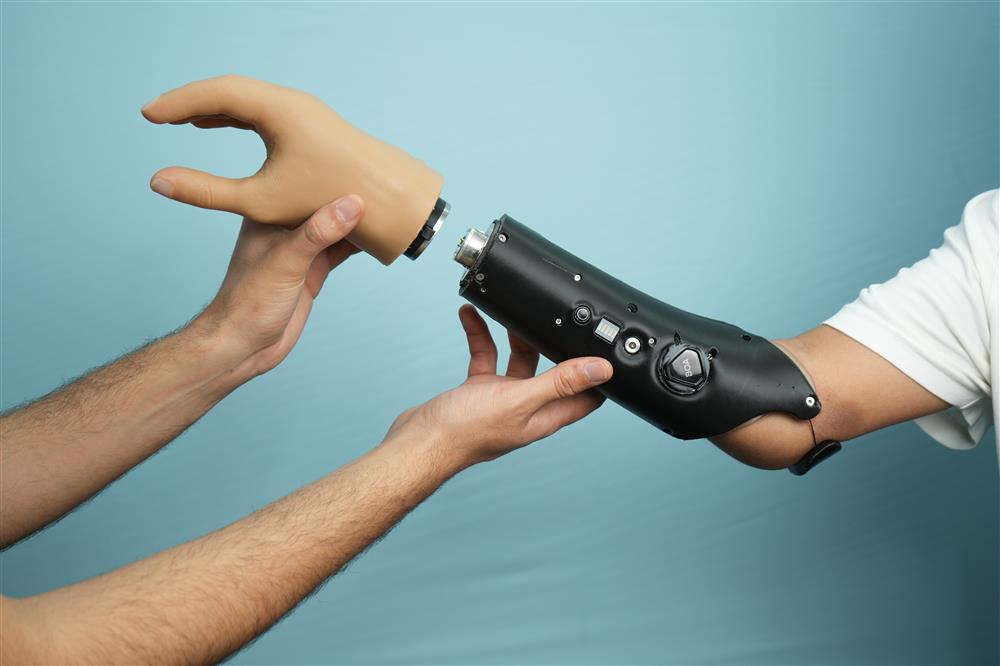
Cure Bionics is a social start-up based in Sousse (Tunisia), pioneering the production and distribution of smart, CE-certified bionic hands in Africa and the Middle East. Cure Bionics integrates 3D printing, gamified training tech, and decentralized care, delivering high-quality prosthetics to underserved areas and supporting local clinicians. Between 2023 and 2025, more than 50 users were fitted and over 150 clinicians trained. Funded by grants and sales, it aims to scale to other underserved regions.
Problems Targeted
Young people and adults with limb loss in Africa, the Middle East, and Europe lack access to affordable, high-quality prosthetics and rehabilitation support.
Solution, Innovation and Impact
Cure Bionics, headquartered in Sousse, designs and manufactures bionic hands with haptic feedback and adjustable 3D-printed sockets adaptable to growth/changes for people with upper-limb disabilities. The prosthetics are smart, lightweight, and comply with the CE standards, which is mandatory for products sold in Europe. Cure Bionic has set up a supply chain that decentralizes prosthetic manufacturing and reduces costs. Local clinicians scan, fit, and print sockets on-site, which enables rapid delivery and minimizes repeated fittings, crucial for growing young users and those from remote communities. The MyoLink device – equipped with multilingual, gamified rehabilitation exercises – teaches users to control the prosthesis through muscle signals, offering interactive, language-inclusive training. Cure Bionics has active partnerships with the National Health Insurance Fund, Sahloul University Hospital, and the Military Hospital in Tunis. Between 2023 and 2025, more than 50 users have been fitted, 150+ clinicians trained, and over 300 app-based rehab sessions have been delivered. The open, scalable care model is affordable for rural users, supports regional industry growth, and enables the expansion of high-quality assistive devices and local expertise in low-resource settings.
Funding, Outlook and Transferability
The Cure Bionics funding model combines direct sales, training subscriptions, and international grants, including from the Gates Foundation ($50,000), Remarkable Accelerator ($35,000), Unity ($50,000), and USAID (technical assistance). In 2024 it generated $80,000 in revenue and €135,000 in grants. Cure Bionics aims for regional scale-up via 50 decentralized hubs and new product lines. By 2025 the model has already been replicated to Libya, with plans for expansion to Kenya, UAE, France, Austria, and Morocco. (#ZeroCall26)
Media
Related information
- Connections
- 1
-
Organization