Building a tech infrastructure, training, and IT job creation for persons with visual impairments
- Solution
- Promoting technology and capacity-building towards employment
- Organization
- Living Dignity For The Blind
- Country of Implementation
- Myanmar
- Region
- Asia & Pacific
- Subregion
- Southeast Asia
- Start Year
- 2019
- First published
- 03.12.2023
Solution details
People
“The lives of visually impaired persons are elevated and motivated for a brighter future through this programme. ” Kwai Nan Dashi, Team Leader, Living Dignity for the Blind working team
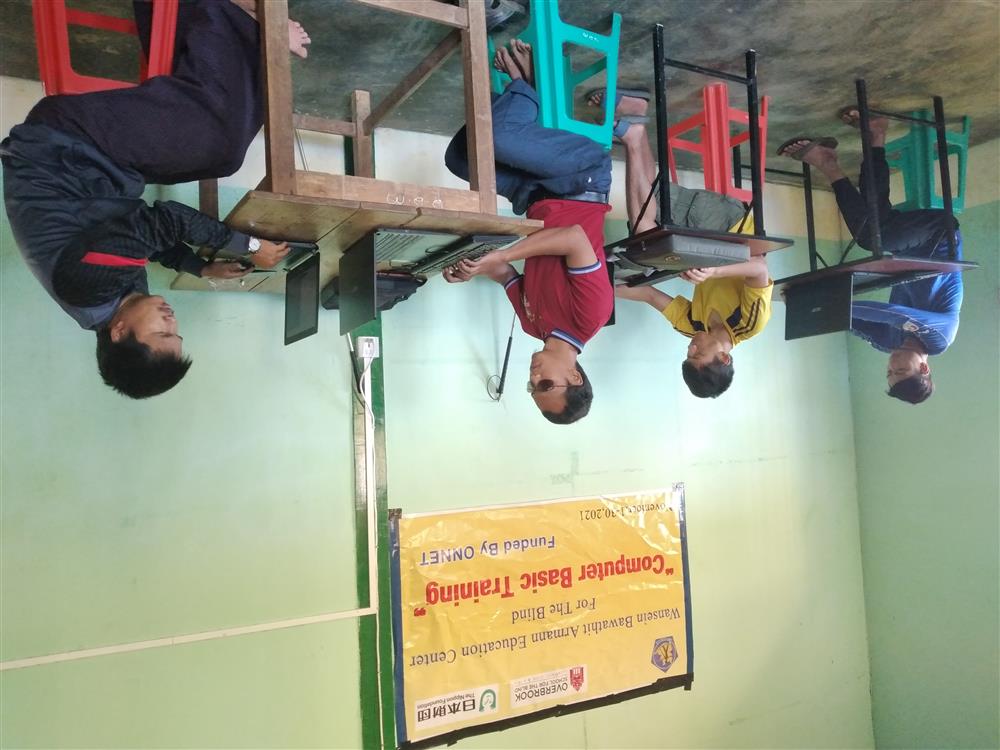
Living Dignity for the Blind, a DPO based in Myanmar, provides decentralized courses and informal training to visually impaired individuals in remote areas of the country. Users with disabilities receive online and in-person training on how to use a multitude of devices and assistive technologies. Moreover, the project enables persons with disabilities to develop mobile apps that address the unmet demand among the disabled population in Myanmar. Persons who are trained find jobs in tech-related professions, and the programme has spread out to several other regions of the country.
Problems Targeted
Persons in Myanmar who are blind are mostly excluded from the community and from employment prospects.
Solution, Innovation and Impact
Living Dignity for the Blind, established as a DPO in 2019 in Myanmar, has developed a model of empowering persons who are visually impaired and blind, building on text-to-speech technology. The organization, which by 2023 consisted only of six persons (four of whom having a visual disability themselves), has provided extensive training in computer usage and smartphone operations for visually impaired individuals across Myanmar. It offers specialized job-skill training programmes encompassing music, audio engineering, and YouTuber training, but also online safety, cybersecurity, and digital finance management. To broaden access, the organization has facilitated computer room installations in rural schools for the blind, and also established the first resource room for students with visual impairments in the government university in Yangon. Living Dignity for the Blind members built a Myanmar language text-to-speech system, working both Windows and Android systems. A fully accessible Myanmar keyboard is also being developing for the Android operating system. Persons trained found a variety of jobs, for instance, as travel ticket sellers, audio engineers, music trainers, computer trainers, apps developers, music players in bars, and successful YouTubers. The DPO also developed and launched a ‘money reader’ app, since in Myanmar all banknotes are the same size, and the app has recorded over 10,000 downloads since 2018.
Funding, Outlook and Transferability
Living Dignity for the Blind was funded by several international development funding entities, including the Abilis Foundation from Finland (2019, €10,000); Overbrook School’s international programme in Philadelphia (2019 and 2020, a total of appx $32,000); and the International Council for Education of Persons with Visual Impairment’s higher education project ($16,400). By 2023 the project had been replicated in Yangon City and nine other regions of Myanmar. (Awardee 2024)
Media
Pictures
Videos
Life Story
THE STORY OF WAI POO THANT ZIN, BENEFICIARY OF THE LIVING DIGNITY FOR THE BLIND MODEL
“I am the first visually impaired YouTuber in Myanmar!”
My name is Wai Poo Thant Zin and I’m a visually impaired YouTuber. While I was at a school for the blind I developed a deep interest in film and music, so I intended to become a famous singer. However, my album was not a great success. Then I discovered I could find another door to open: a YouTube channel! I took the related trainings even though they were not fully accessible, but I tried to figure them out. Then I received fully accessible training from Living Dignity and was able to design my own YouTube product by myself. I run the first YouTube channel for the blind in Burma, reading Burmese audio books together with my peer friend. She is near-sighted, but she can read very well. The success of our channel earns enough to cover our living expenses. Then I decided to run another channel to present short dialogues to promote self-advocacy in our community. I collect video clips about the abilities and independent living of different types of disabled persons living in two regions near my native town. I would say that the success of this channel is even greater than the first one because we receive many interesting contacts from community members with disabilities.
Related information
- Connections
- 1
-
Organization