Search Results
Search
Filter results
Advanced Filters
Your search returned 84 Solutions
-

National state-run training and job-placement programme for people with disabilities
The Format for Work, Disability Line programme offers people with disabilities theoretical and practical vocational training and then placement in dependent employment. The programme was launched in 2014. Between 2015 and by 2020 there were a total of 9,929 users, of whom 7,995 completed their training.
SCENE Chile - National Training and Employment Service, Training for Work, Chile -

Literacy app to stimulate reading development for children with Down Syndrome
La Mesita was developed at the Catholic University of Chile. It is a free app that supports the reading development of children, especially those with Down Syndrome. Users can select a specific environment, such as a fair or an amusement park. La Mesita adapts to the user´s characteristics, and allows for an endless number of activities.
Catholic University of Chile, Centre for the Development of Inclusive Technologies, La Mesita, Chile -
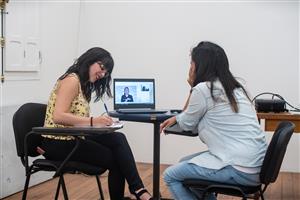
Municipality Council running a four-step job integration model
Users undergo an assessment before being trained in obtaining a job. Support then continues during the start of the job, making reasonable adjustments, and continues with a follow-up evaluation and contact throughout the work experience. Since its launch in 2013, 356 people with disabilities have participated and 118 have found employment.
Municipality of Providencia, Providencia Labour Inclusion Programme, Chile -
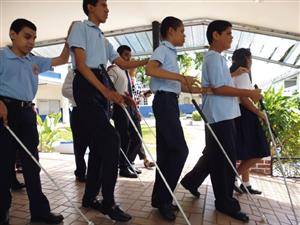
Teaching students with disabilities to manage risks associated with natural disasters
RET Americas has developed inclusive learning methodologies to integrate disaster risk reduction and management (DRR&M) as a topic in public schools, introducing curricula and exercises specifically for students with disabilities. Since 2015, more than 4,000 young people with disabilities have taken part in the project.
RET International - Protection through Education, Inclusive school safety in Panama (disasters and natural hazards awareness), Panama -
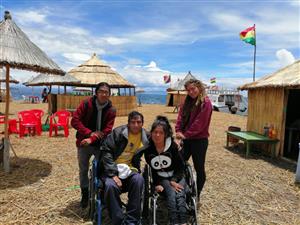
Advanced life-skills training for wheelchair users
In 2012 the Association of People with Disabilities in Bolivia launched ‘Nueva Esperanza’, a programme that teaches life skills to people with physical disabilities, especially wheelchair users. In 2017 the local practice was recognized nationwide and was included in a new labour law. As of 2022 there were 25 beneficiaries.
Nueva Esperanza Association of People with Physical Disabilities, Programa Vida Independiente (Independent Living Programme), Bolivia -
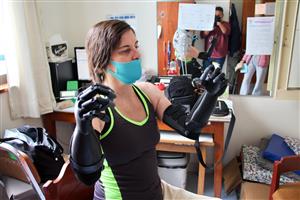
Affordable prosthetics with 3D scanning and printing and AI-powered myoelectric control
LAT Bionics (a PUCP spin‑off) makes affordable AI myoelectric, 3D‑printed upper‑limb prostheses at about 10% of imported cost (~$2,500). Smartphone 3D scanning and local printing cut delivery to 2–3 weeks. Funded by grants and sponsorships; most users pay interest‑free. Since 2021 >100 devices in 5 countries; 80% found work.
LAT Bionics, LAT Bionics, Peru -
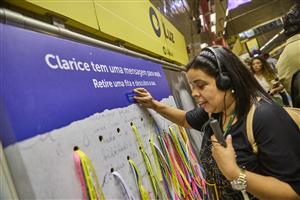
Metro stations showcasing artists through fully accessible exhibitions
Centenários Project transforms São Paulo’s Yellow Line stations into fully accessible art exhibitions. Co‑curated with people with disabilities and Escola de Gente, it offers Braille, tactile signs, Libras, audio description and free access; it reached 380,000+ people.
Motiva Institute, Centenários Project, Brazil -
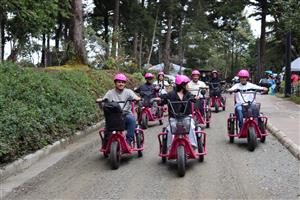
Electric handbike production supporting communities, mobility, and jobs
MATT Mobility makes an electric handbike attachment for manual wheelchairs, assembled locally from bicycle parts. It increases independence, maps accessible places via Club2G, creates jobs and tours, and has grown across Colombia with international pilots.
Matt Movilidad, MATT Mobility Electric Handbike, Colombia -
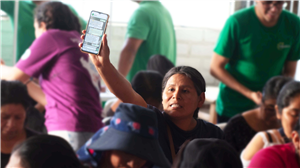
Accessible micro-learning platform transforming training of frontline workers
Musa is a WhatsApp-based micro-learning platform that delivers accessible, app-free training for frontline workers with intellectual or hearing disabilities. It uses plain language and short modules, reached 450,000+ learners with 90% completion, and operates B2B ($0.70–$6/learner).
Edge Tec SAC, Musa, Peru -
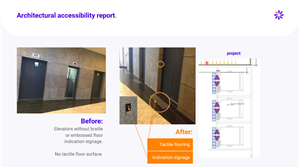
Large digital job platform linking hiring with accessibility assessment in workspaces
Job Map and Architectural Accessibility (Egalite) audits workplaces to identify and remove physical and job-access barriers. Launched in 2021, it assesses 400+ roles, maps readiness, has been used by 30+ companies and increased hiring of persons with disabilities.
Egalite, Job Map and Architectural Accessibility, Brazil