Search Results
Search
Filter results
Advanced Filters
Your search returned 314 Solutions
-
An app reviewing the accessibility of locations by user’s “yes” and “no”
Access Earth discovered that a simple yes or no answer provides much more clarity than an elaborate three-star rating. One of the main focuses of the website and the app is to create an element of ease in the rating process. This allows users to make a quick, yet valuable, rating of a venue with the option to add any comments.
Access Earth, Ireland -
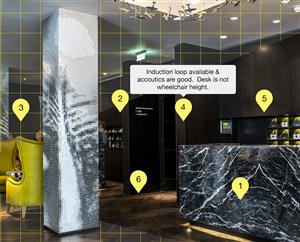
Picture galleries providing comprehensive insight into a venue´s accessibility
The Blue Badge Style Access Gallery features images of venues, hotels, and restaurants overlaid with notes on accessibility features. The information can be accessed via an app through the Blue Badge Style website, a British disability organization, or via the venue’s website.
Blue Badge Style, Blue Badge Style Access Gallery, United Kingdom -
English skills for persons with learning difficulties
The GNW-SupEFL online portal assists persons with specific learning difficulties in acquiring critical language skills in English. People with learning disabilities from six countries and EFL language teachers contribute to the design of the courses. The portal is available free of charge to people with special learning difficulties.
GNW - Gauges North West, Hungary -
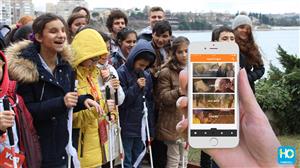
Audio descriptions-app making movies accessible for the blind
My Dream Companion was developed by visually impaired YGA graduates and Turkcell, a mobile phone operator. The cost-free app provides audio descriptions of movies without requiring any other equipment or software. From 2015 to 2017 approximately 180,000 persons have benefitted from the app.
YGA - Young Guru Academy, My Dream Companion, Turkey -
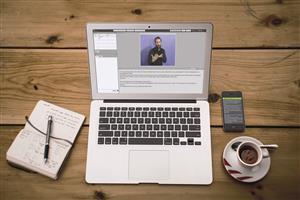
Remote speech-to-text and sign language interpretation
VerbaVoice, is a flexible and customizable online interpreting platform. Each component (original video and audio, live transcript and sign language video, document upload) can be customized as needed. The system also works in multilingual contexts and facilitates foreign language learning processes.
VerbaVoice GmbH, Germany -
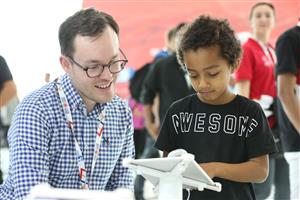
Teaching sign language with videos, Artificial Intelligence, and gamification
SignLab uses video, Artificial Intelligence, and gamification to teach sign languages more effectively and affordably. The online and offline platform has quadrupled the number of people learning Norwegian sign language since 2018, and it will introduce Chinese, Indonesian, and Indian sign languages by 2022.
SignLab AS, SignLab - Toleio, Norway -
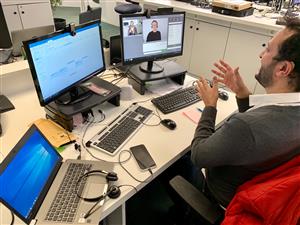
Remote sign language interpretation and transcription for professional users
Tadeo offers automatic instant transcription and video sign language on demand. The service is offered by subscription, and users are guaranteed immediate availability. As of 2020, Tadeo has over 100 employees providing services to nearly 400 private companies and public authorities throughout France.
Delta Process - Tadeo, Tadeo, France -
Moving step-by-step towards an inclusive university
DoBuS supports students with disabilities to graduate and implements structural changes based on the experiences gained in the counselling service with the aim of reducing as far as possible the extra work that students with disabilities have to master.In 2014, more than 300 students and 100 applicants with disability were counselled per semester.
University of Dortmund, Germany -
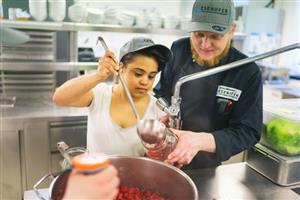
Hotel employment and training for persons with psychosocial disabilities
The Wesenufer Hotel in Austria was opened by Pro mente in 2008 and is a medium-sized seminar hotel that employs people with psychosocial impairments and provides them with multi-professional training. Due to the expansion of the hotel, the number of employees has increased from 20 to 54 by 2022.
Pro Mente Oberoesterreich, Wesenufer Hotel & Seminarkultur an der Donau, Austria -
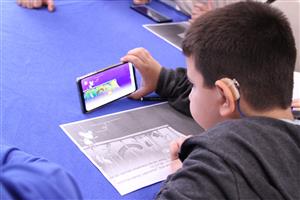
Storytelling mobile app for children who are deaf or blind
In 2019 the Turkish Association of the Deaf (TIED) launched an interactive video app aimed at children with hearing disabilities that functions like an audio-visual library. The audio description, introduced in 2022, makes the library also accessible for children with visual impairments.
Association of People with Hearing Impairment of Turkey, İki-Dilli Öyküler (Bilingual stories), Turkey