Search Results
Search
Filter results
Advanced Filters
Your search returned 883 Solutions
-
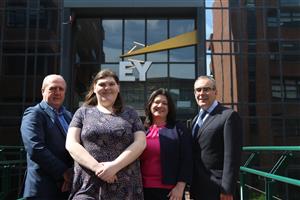
Internships for people with intellectual disabilities at a leading consultancy
The TCPID has established a higher education programme and supported transition to employment for people with intellectual disabilities. EY has been a core partner since 2017. By 2020 six graduates have completed paid internships, four of whom have been offered permanent employment.
TCIPD - Trinity Centre for People with Intellectual Disabilities, TCPID Graduate Internship programme, Ireland -
OBLIGATORY ACCESSIBILITY STANDARDS
Uganda is among the first sub-Saharan countries to have developed their own accessibility standards. Uganda’s standards are mandatory for school construction projects and other public facilities. Also a National Accessibility Audit Committee and several District Accessibility Audit Committees were set up.
Ugandan Ministry of Gender Labour and Social Development, Uganda makes accessibility standards mandatory, Uganda -
Private company joins a university in training students in web accessibility
"Los Laboratorios de Accesibilidad Web" (Web Accessibility Laboratories) is a project for improving web accessibility expertise in Latin America. The approach is based on a training course and the development of web accessibility assessment tools. Since the start in 2015, 150 programmers and designers have passed the course.
Hearcolors, The Web Accessibility Laboratories, Mexico -
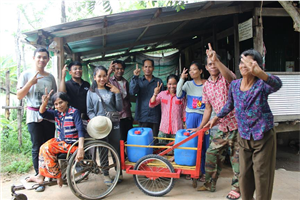
Accessible agriculture technology creating inclusive jobs in rural areas
Initiated by Light for the World, an international NGO, the "Accessible Agriculture" project is assisting farmers with disabilities and older persons to participate in farming through the development of personalized assistive technology, adapting processes such as water transportation and mushroom growing.
Light for the World Cambodia, Accessible Agriculture – The Agri-Lab Experience, Cambodia -
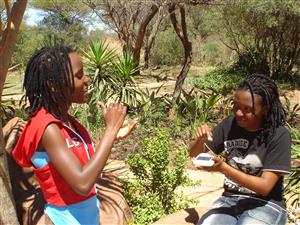
Affordable Hearing Aids through Solar Technology
Solar Ear manufactures low-cost, environmentally-friendly hearing aids and solar-rechargeable batteries. The company employs and trains people who are deaf to manufacture the hearing aids and to lead the replication of the technology. The company also runs a holistic hearing-loss detection and education programme.
Solar Ear, Botswana -
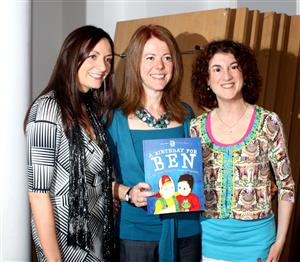
Creating a more accessible world for deaf children in Ireland
Sound Advice supports Inclusive Education for deaf children while empowering parents to develop their child’s full potential. The measures include public relations, training and counselling, but also reading promotion and mentoring. One success was that newborns in Ireland are entitled to digital hearing aids.
Sound Advice, Ireland -
The project fosters the inclusion of students with disabilities in mainstream primary education in Macedonia and Serbia. It introduces assistive technology, including e-accessible textbooks and educational applications, into mainstream instruction, and strengthens the capabilities of public schools.
The e-Accessible Education Project introduced assistive technology into mainstream primary schools in the country: schools were equipped with assistive computer peripherals (e.g. big-button keyboards, trackballs, etc.) and over 300 teachers were trained in using assistive technology in their work with students with disabilities.
Ecumenical Humanitarian Organisation, E-accessible education in Macedonia and Serbia, North Macedonia -
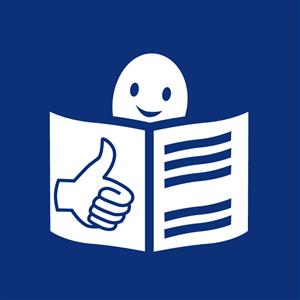
By promoting Europe-wide quality standards for accessible information for persons with intellectual disabilities, this innovative practice helps to create a solid framework for improving the access of persons with intellectual disabilities to information in line with Articles 9 and 21 of the UNCRPD.
The guidelines together with the European "easy-to-read" logo help set common standards and quality criteria for "easy-to-read". The standards help to unify the diverse approaches to producing accessible information for persons with intellectual disabilities. They have also helped to spread the "easy-to-read" concept.
Inclusion Europe, European standards for easy-to-read information, Belgium -
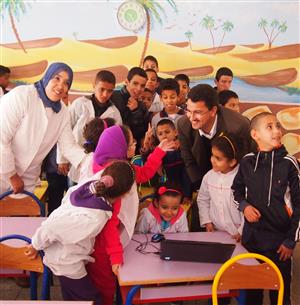
Improving Deaf Children’s Reading Through Technology
"All Children Reading" provides access to education for deaf children throughout Morocco. A key element is a software that helps teachers and parents to create teaching materials in Moroccan Sign Language (MSL). In addition, a sign language-friendly assessment for early learners was created, which is standardized and comparable.
IDRT - Institute for Disabilities Research and Training, Inc., All Children Reading, Morocco -
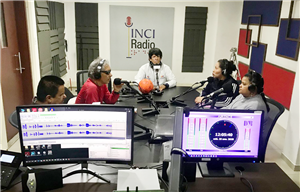
Government-sponsored radio station targeting blind and visually impaired listeners
La Radio Incluyente is a radio station in Colombia with programmes targeted towards the blind and visually impaired. The government-financed station has 30,000 Spanish speaking listeners in almost 100 countries.
INCI - National Institute for the Blind, INCIRadio La Radio Incluyente, Colombia
- Page 1
- Page 2
- Page 3
- Page 4
- Page 5
- Page 6
- Page 7
- Page 8
- Page 9
- Page 10
- Page 11
- Page 12
- Page 13
- Page 14
- Page 15
- Page 16
- Page 17
- Page 18
- Page 19
- Page 20
- Page 21
- Page 22
- Page 23
- Page 24
- Page 25
- Page 26
- Page 27
- Page 28
- Page 29
- Page 30
- Page 31
- Page 32
- Page 33
- Page 34
- Page 35
- Page 36
- Page 37
- Page 38
- Page 39
- Page 40
- Page 41
- Page 42
- Page 43
- Page 44
- Page 45
- Page 46
- Page 47
- Page 48
- Page 49
- Page 50
- Page 51
- Page 52
- Page 53
- Page 54
- Page 55
- Page 56
- Page 57
- Page 58
- Page 59
- Page 60
- Page 61
- Page 62
- Page 63
- Page 64
- Page 65
- Page 66
- Page 67
- Page 68
- Page 69
- Page 70
- Page 71
- Page 72
- Page 73
- Page 74
- Page 75
- Page 76
- Page 77
- Page 78
- Page 79
- Page 80
- Page 81
- Page 82
- Page 83
- Page 84
- Page 85
- Page 86
- Page 87
- Page 88
- Page 89