Search Results
Search
Filter results
Advanced Filters
Your search returned 143 Solutions
-
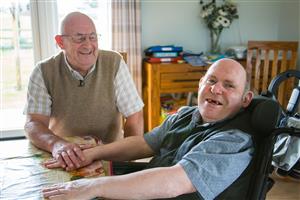
Philanthropy and government combining to create national disability service reform
The Service Reform Fund aims to implement reform in mental health, disability, and homeless services. The SRF awards government grant funding for projects that support persons with disabilities to move out of institutions into a community-based environment. From 2016 to 2018, 16 grants totalling € 7.9 million were awarded.
Genio Trust, Ireland -
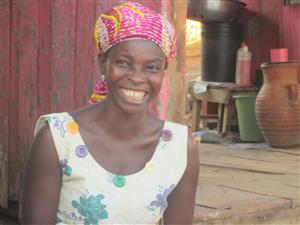
Five-Year Plan for Mental Health Care in Rural Areas
BasicNeeds Ghana capacitates physicians and health workers about mental health issues, how to treat them, and how to gain knowledge about appropriate medication. Since its founding in 2002, the programme has benefitted more than 19,000 poor and marginalized living people with mental health issues or epilepsy.
Basic Needs Ghana, Ghana -
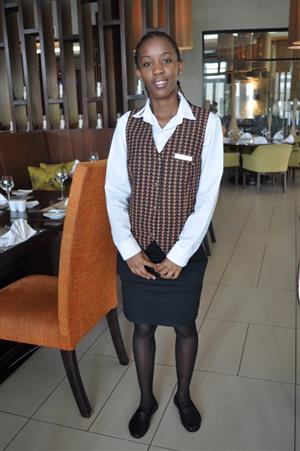
The Living Link: Creating Abilities from Disabilities
To enhance the potential of intellectually disabled adults The Living Link developed a one-year Adult Integration Programme, which consists of teaching essential work readiness and life-skills, providing work training and experience and attending a five-day "Independent Living tour," during which newly learned skills are applied and assessed.
Living Link, South Africa -
"Proefwonen" – fast access to affordable homes
Through "Proefwonen", housing and social service providers collaborate to facilitate rental access for people with intellectual disabilities or mental health problems. A steering group matches available housing with the candidate-tenants through a consensus process. 24 candidate-tenants have entered the program over a period of three years.
Zennevalley Home Furnishings, Belgium -
A dedicated TV channel for the hearing impaired
Broadcasting of the Listening with Your Eyes channel began in 2017. The channel allows conventional programmes to provide closed captioning and sign language displayed over the original content. The size and position of the captioning and sign on the display can be determined by the viewer using a remote control and receiver.
Organization for Broadcasting and Communications for People with Disabilities, Japan -
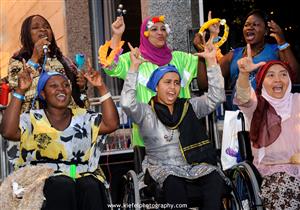
“Infiltration strategy” for women and girls with disabilities
The three-week WILD program of MIUSA has trained more than 200 women with disabilities from over 80 countries on strategies for improving the lives of women and girls with disabilities. To move from exclusion to "infiltration" these activists form partnerships with development agencies and governments.
MIUSA - Mobility International USA, United States of America -
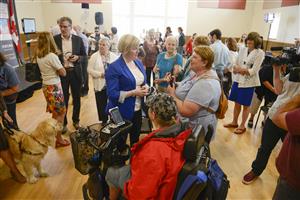
Accessible Canada Act: first federal accessibility legislation in Canada
ACA, the Accessible Canada Act, was passed in 2019 and aims to make Canada accessible by 2040. The ACA applies to all government departments, federally regulated agencies, and parts of the private sector, such as banking, telecommunications, and transportation.
Canadian Department of Employment and Social Development, Accessible Canada Act (ACA), Canada -
Ensuring equal access for Members of Parliament
South Africa has implemented steps that ensure the inclusiveness of its Parliament. The introduced policies contain support measures for Members of Parliament and employees with disabilities. The provision of reasonable accommodation has led to measures that go beyond individual support and that benefit the whole Parliament.
South African Parliament, POLICY ON FACILITIES FOR MEMBERS WITH SPECIAL NEEDS & POLICY ON REASONABLE ACCOMMODATION FOR EMPLOYEES WITH DISABILITIES, South Africa -
Sexual Abuse Victim Empowerment program
Cape Mental Health runs a unique Sexual Abuse Victim Empowerment (SAVE) program that empowers intellectually disabled victims of sexual abuse and provides them with access to justice. The program helps survivors prepare for court proceedings and helps the legal system to understand their special needs.
Cape Mental Health, South Africa -
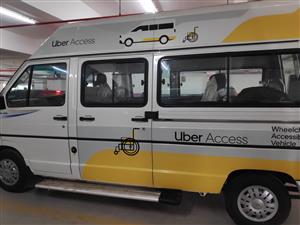
Cooperation of an IT-company with Uber for improving the accessibility of taxi services
The Indian IT group Mphasis developed two services joining forces with the taxix service Uber to make their services more accessible and financed their implementation: uberASSIST offers passengers assistance from trained driver-partners, and uberACCESS offers retrofitted, wheelchair-accessible vehicles.
Mphasis F1 Foundation, Mphasis uberASSIST and uberACCESS, India