Search Results
Search
Filter results
Advanced Filters
Your search returned 883 Solutions
-
One children’s book in nine accessible formats
The project promotes the concept of inclusion through book workshops for children, teachers, and educators allowing children aged 7 to 11 years to experience inclusion in a sensory and playful way. The main feature is the children's book "Sonhos do Dia" (Dreams of the Day), which is presented in nine diverse and accessible formats.
WVA Editoria - Accessible Publishing, Brazil -
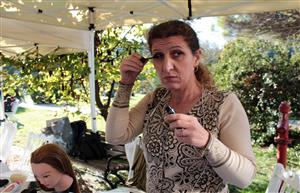
Volunteer-based distance learning platform for people with visual impairments
Engelsiz Erisim Derneği has developed a online learning platform offering courses to people with visual impairments. Up to seven different classes are taught daily using TeamTalk, a free voice chat room. The courses are prepared and conducted by visually impaired instructors and are uploaded to the online platform.
ABFA - Association of Barrier Free Access, Online Learning Platform, Turkey -
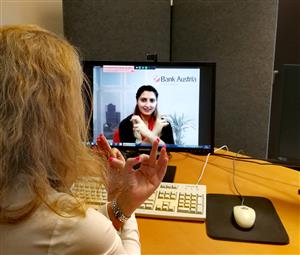
Bank employees provide sign language services to customers
Since 2015, UniCredit Bank Austria has been offering Austria-wide consultations for customers in the form of sign language via video calls allowing a variety of transactions. Three sales managers are available for consultation in sign language as part of the "online branch" from Monday to Friday from 8 a.m. to 8 p.m. by appointment
Unicredit Bank Austria AG, Smart Banking in Sign Language, Austria -
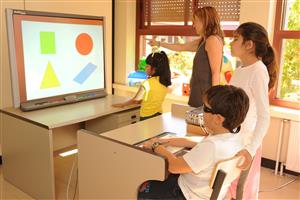
Teaching blind students in regular school classes
The mission of the project is to provide visually impaired students with assistive technology and specific support teams so that they can participate in regular classes. Regardless of age or educational stage, these teams support students with special needs from early intervention to the university level and adulthood.
ONCE Foundation, Spain -
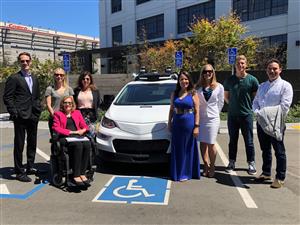
Government-led crowdsourcing platform to guide policymaking for inclusive workplaces
The US Department of Labor’s ePolicyWorks is a ‘virtual town hall’. Through an accessible online crowdsourcing tool, anyone can participate in national dialogues on employment and disability issues - a model that has already been adopted by other US agencies.
Department of Labor of the US, ePolicyWorks Initiative, United States of America -
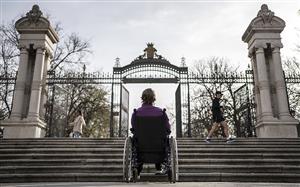
App facilitating citizen reporting of accessibility barriers
The AccesibilidApp was developed by COCEMFE and Vodafone and enables citizens to report accessibility and mobility barriers in their built environment. COCEMFE will then contact those responsible to remove these barriers. Since 2014 a total of 2,331 cases have been reported by 1,355 users.
COCEMFE - Spanish Confederation of People with Physical and Organic Disabilities, Accessibility App, Spain -
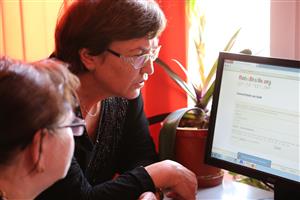
Creating smart accessible media using RoboBraille
RoboBraille is a free, award-winning service, capable of automatically converting documents into alternate formats. The goal of the project is to explore new smarter and easier methods to prepare and produce educational material in alternate formats using RoboBraille and other relevant free ICT tools.
Hilfsgemeinschaft - Austrian Association supporting the Blind and Visually Impaired, Austria -
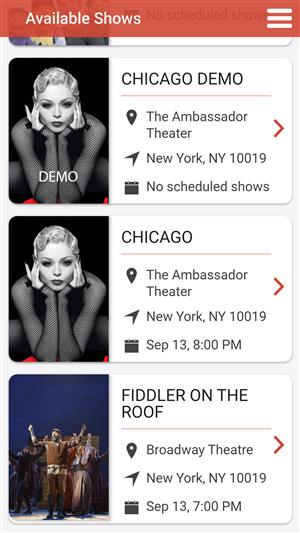
Accessibility app for live shows
GalaPro provides synchronized accessibility and translation services for any live show or movie. Users can choose from subtitles, closed captioning, dubbing, audio description, and amplification as well as access information and buy tickets online. GalaPro can be used throughout the world on any mobile device.
Gala Prompter, GalaPro App, Israel -
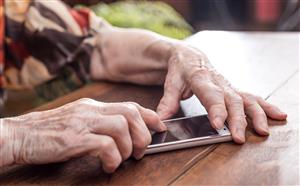
Comprehensive database of accessibility features in mobile devices and Smart TVs
"Global Accessibility Reporting Initiative" is a free online database that lists the accessibility features of mobile phones, tablets, apps, Smart TVs, and wearables. GARI provides information on more than 110 accessibility features of approximately 1,100 mobile phone models and receives approximately 500,000 views per month.
Mobile & Wireless Forum, GARI, Belgium -
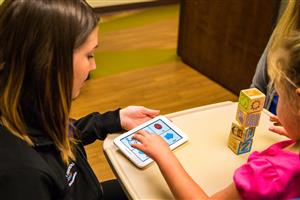
Alternative communication platform for people with learning difficulties
The Livox app enables users with speaking or learning difficulties to communicate using virtual cards with pictures or illustrated short phrases. The app can be operated noth by blinking and by speech. The app is self-learning and also features a content creator to add communication cards with videos, pictures and music.
Livox, Livox, Brazil
- Page 1
- Page 2
- Page 3
- Page 4
- Page 5
- Page 6
- Page 7
- Page 8
- Page 9
- Page 10
- Page 11
- Page 12
- Page 13
- Page 14
- Page 15
- Page 16
- Page 17
- Page 18
- Page 19
- Page 20
- Page 21
- Page 22
- Page 23
- Page 24
- Page 25
- Page 26
- Page 27
- Page 28
- Page 29
- Page 30
- Page 31
- Page 32
- Page 33
- Page 34
- Page 35
- Page 36
- Page 37
- Page 38
- Page 39
- Page 40
- Page 41
- Page 42
- Page 43
- Page 44
- Page 45
- Page 46
- Page 47
- Page 48
- Page 49
- Page 50
- Page 51
- Page 52
- Page 53
- Page 54
- Page 55
- Page 56
- Page 57
- Page 58
- Page 59
- Page 60
- Page 61
- Page 62
- Page 63
- Page 64
- Page 65
- Page 66
- Page 67
- Page 68
- Page 69
- Page 70
- Page 71
- Page 72
- Page 73
- Page 74
- Page 75
- Page 76
- Page 77
- Page 78
- Page 79
- Page 80
- Page 81
- Page 82
- Page 83
- Page 84
- Page 85
- Page 86
- Page 87
- Page 88
- Page 89