Search Results
Search
Filter results
Advanced Filters
Your search returned 98 Solutions
-
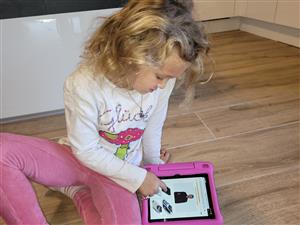
A start-up app that reaches more than 1.3 million sign language learners worldwide
Lingvano, Austrian Start-Up: Mobile app for learning sign languages. Offers courses in American, Austrian, and British Sign Language. From 2018 to 2023, reached over 1.3 million users globally.
Lingvano App, Austria -
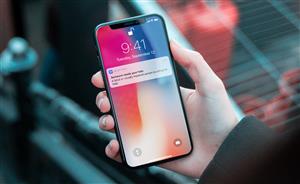
Smartphone app connecting visually impaired users in need with supportive volunteers
Be My Eyes, a Danish start-up company with headquarters in San Francisco, California, introduced a free app that connects blind and low-vision people with sighted volunteers. The app consists of a two-way audio and one-way video feed that allows the sighted volunteer to be the eyes of the blind user.
Be My Eyes, Be My Eyes, Denmark -
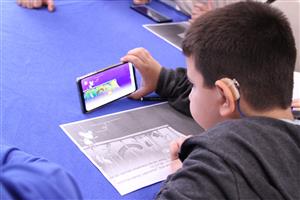
Storytelling mobile app for children who are deaf or blind
In 2019 the Turkish Association of the Deaf (TIED) launched an interactive video app aimed at children with hearing disabilities that functions like an audio-visual library. The audio description, introduced in 2022, makes the library also accessible for children with visual impairments.
Association of People with Hearing Impairment of Turkey, İki-Dilli Öyküler (Bilingual stories), Turkey -
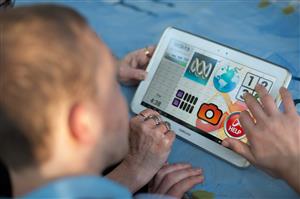
Using Technology to Increase Autonomy
In case of an emergency users can hit the "Big Red Button" app on their Jeenee mobile phone, which puts them in direct contact with the CCA's help centre – staffed by people knowledgeable and trained in disability issues. In 2018, Jeenee Mobile had tens of thousands of customers both with and without disabilities throughout Australia.
Community Connections Australia & Jeenee Mobile, “Big Red Button” App, Australia -
A Sign Language App, Dictionary and Learning Tool
The FingerTalk app for the first time digitized South African sign language dictionary and made it available for free. The app is designed as a self-learning tool and enables users to share SASL signs via social media and the messenger service WhatsApp. Until mid-2018, more than 4,000 users have downloaded the app.
Wigital, FingerTalk, South Africa -
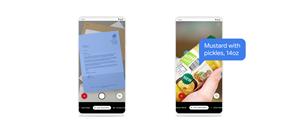
A smartphone app using the camera to describe all sorts of objects and text around the user
Google introduced the app ‘Lookout’ in 2019 whereby users who take a photo with their smartphone receive a text or voice message with a description of objects, printed text, handwriting, and barcode/OR-code recognition. By 2022 the app had been more than 100,000 downloads. Google Inc., Lookout,
-
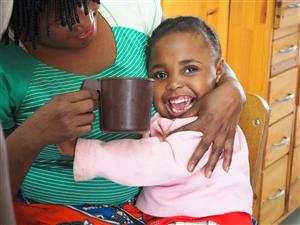
Using an app, training, and advocacy to fight malnutrition among children with disabilities
SPOON's Count Me In Project, U.S.: Combines training with a health app to combat malnutrition in children with disabilities. Reached over 14,000 children in 2022 and produces data for advocating inclusive policies and investments.
Count Me In (app), Lesotho -
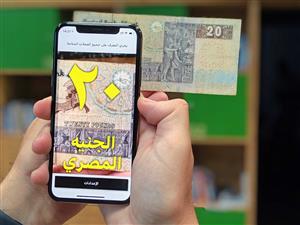
Mobile app that identifies banknotes from more than 100 currencies
Cash Reader, developed by the start-up company Hayaku from the Czech Republic, is an app for smartphones that identifies banknote values for almost every currency globally. Users point their smartphone’s camera at the banknote and the app informs them of the value, either using speech or vibration patterns.
Hayaku s.r.o., Cash Reader, Czech Republic -
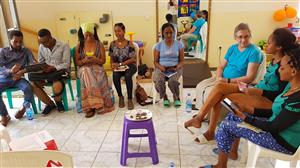
App with hands-on information on rehabilitation to fieldworkers in low-income countries
RehApp is a free app that supports fieldworkers in low-income countries to provide effective rehabilitation services to people with disabilities. The app provides specialist information and options for interventions developed by more than 70 disability experts. In 2020 there were 200 users.
Enablement B.V., RehApp, Netherlands -
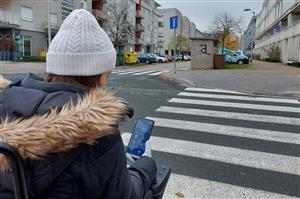
A city collecting all the information about its accessibility for a smartphone app
Accessible Zagreb is a web/app service of the City of Zagreb, Croatia, that provides detailed information about accessibility and the respective accessibility features of public facilities and streets, as well as real-time information about public transport. Accessible Zagreb is available in Croatian, English, and German.
City of Zagreb, Office for Social Protection and Persons With Disabilties, Accessible Zagreb online service, Croatia