Search Results
Search
Filter results
Advanced Filters
Your search returned 5 Solutions
-
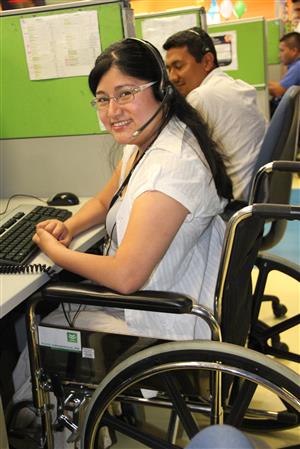
Model promoting decent work for persons with all kinds of disabilities
Based on a capability approach, the pilot model promotes skills training and labour intermediation for persons with disabilities in order to enhance their opportunities in the open labour market. By 2016 "I am capable" has enabled the employment of 3,015 people and was planned to become a nationwide programme.
CONADIS - National Council for the Integration of People with Disabilities Peru, I am Capable Model of 2012 National Council for the Inclusion of Persons with Disabilities (CONADIS), Ministry of Women and Vulnerable Populations (MIMP); Ministry of Labour and Employment Promotion (MINTRA, since July 2016) , Peru -
Training family groups in remote Amazon villages to use sign language and to replicate it
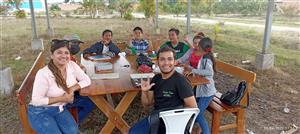
Paz y Esperanza, Peru: Offers courses in Peruvian Sign Language and Spanish for families with deaf children in the Amazon region. In 2023, 60 participants, including both children and adults.
Peace and Hope Diaconal Ministry Association, Peruvian Sign Language for disadvantaged deaf people, Peru -
Affordable prosthetics with 3D scanning and printing and AI-powered myoelectric control
LAT Bionics (a PUCP spin‑off) makes affordable AI myoelectric, 3D‑printed upper‑limb prostheses at about 10% of imported cost (~$2,500). Smartphone 3D scanning and local printing cut delivery to 2–3 weeks. Funded by grants and sponsorships; most users pay interest‑free. Since 2021 >100 devices in 5 countries; 80% found work.
LAT Bionics, LAT Bionics, Peru -
Accessible micro-learning platform transforming training of frontline workers
Musa is a WhatsApp-based micro-learning platform that delivers accessible, app-free training for frontline workers with intellectual or hearing disabilities. It uses plain language and short modules, reached 450,000+ learners with 90% completion, and operates B2B ($0.70–$6/learner).
Edge Tec SAC, Musa, Peru -
Decentralized hearing care for rural areas using a tele-audiology model
Oír para Crecer delivers tele-audiology to rural Peru. Families use smartphones and Bluetooth hearing aids to connect with remote specialists for testing, fitting and follow-up. 2016–2024: 95,000+ screened, 2,500+ aids delivered, 13 local staff trained; funded 65% by donors and 35% by low user fees.
Oir para Crecer, Tele-Audiology Project, Peru